
There are moments in a dog owner’s life that quietly change everything. Not dramatic moments. Not emergencies. Just an ordinary Tuesday afternoon that draws a clear line between how things were and how things need to be going forward.
Mine happened in a veterinary clinic in the middle of an otherwise unremarkable week.
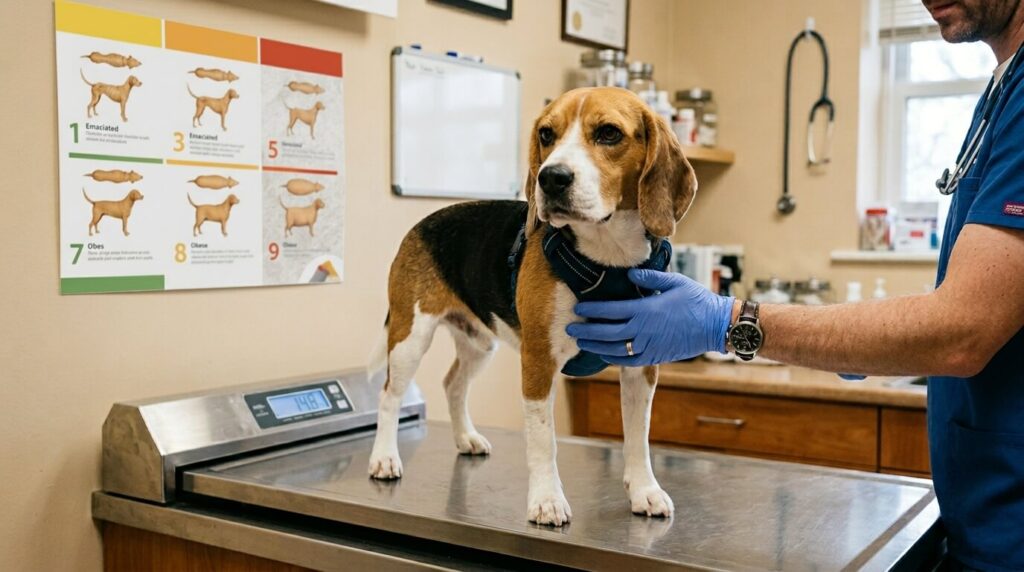
Biscuit — my six-year-old beagle, self-appointed supervisor of everything that happens in this house — had just been weighed. The number on the scale was 2.8 kilograms above his ideal body weight. For a beagle of his frame, that is significant. That is the equivalent of a grown adult carrying an extra 15 to 20 kilograms through daily life and pretending not to notice.
Our vet handled it with the kind of measured, professional kindness that good vets do so well. No drama. She simply placed a body condition score chart on the table, circled the relevant section, and walked me through what the numbers meant for Biscuit’s joint health, cardiovascular function, and long-term quality of life.
Suddenly it wasn’t abstract anymore. It was clinical. It was documented. And it required a real response.
I asked what needed to change. She outlined the standard recommendations — structured portion control, eliminating discretionary treats, considering a commercially formulated weight management diet. All evidence-based, all appropriate. But then she added something I’ve thought about many times since.
“Some of my clients who’ve had the most consistent results are the ones who started preparing their dogs’ meals from whole food ingredients. When you control what goes into the bowl, you control everything — the calories, the protein quality, the fiber content. There’s no guesswork.”
I drove home that evening, measured Biscuit’s kibble for the first time with actual precision, and sat down at my laptop. Three hours later I had fourteen browser tabs open, two canine nutrition reference books on order, and a list of follow-up questions for our vet that I was mildly embarrassed to send.
I sent them anyway.
That was the beginning of a process that genuinely improved Biscuit’s health in ways I didn’t fully anticipate. Not because commercial dog food is inherently inadequate — the well-formulated options are genuinely good. But because taking direct control of his nutrition removed every variable I couldn’t account for. No fillers. No artificial preservatives. No ambiguous ingredients in small print at the bottom of a label. Just real, whole food, prepared with intention and informed by veterinary guidance.
If you’ve had a similar appointment — or if you’ve been watching your dog slow down and looking for a more deliberate approach to their nutrition — you are in exactly the right place.
Here are ten of the best homemade natural dog food recipes for weight loss. Every single one is vet-informed, free of artificial additives, low in calories, and high in the protein and fibre your dog needs to lose weight the right way.
Let’s cook.
Table of Contents
What Makes Homemade Dog Food Actually Work for Weight Loss?
I want to spend a few minutes on this because it matters — and because “homemade” does not automatically mean healthy or balanced. A dog eating plain chicken and rice every day is not getting a complete diet. A dog eating whatever is left over from human meals is almost certainly getting too much salt, the wrong kinds of fat, and ingredients that have no business being in a dog’s bowl.
Done right, homemade natural dog food recipes for weight loss work for four specific reasons.
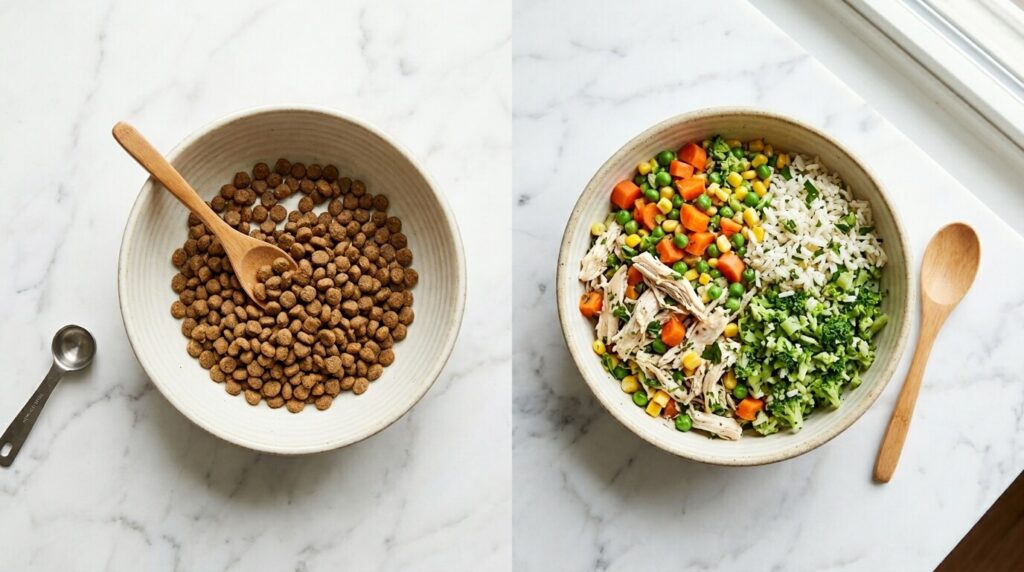
You control the calorie density. Most commercial kibble sits at 320 to 400 calories per cup. The recipes in this article average 150 to 220 calories per cup. Same bowl size. Far fewer calories. Your dog feels like they are getting their normal meal. Their waistline tells a different story — the right one.
You control the protein quality. Named whole animal proteins — chicken breast, turkey, white fish — are far more bioavailable than processed meat meals. According to the Association of American Feed Control Officials (AAFCO), protein quality and digestibility matter as much as quantity when it comes to maintaining lean muscle mass during weight loss. Better protein means better muscle retention as the fat comes off.
You control the fibre. High-fibre vegetables keep dogs full between meals. A dog who is not hungry is not begging, not stealing food off countertops, and not giving you that particular soul-destroying stare while you eat dinner.
You eliminate the junk. No artificial colours. No preservatives. No corn syrup. No unnameable by-products. What your dog eats is exactly what you put in the pot.
What Every Weight Loss Dog Food Recipe Needs
- A lean, named protein as the base — at least 40 to 50% of the recipe
- Fibre-rich vegetables: green beans, pumpkin, zucchini, carrots, broccoli
- A small amount of complex carbohydrates for sustained energy: brown rice, sweet potato, quinoa
- A healthy fat source in controlled amounts: fish oil, a small amount of coconut oil
- Zero salt, zero seasoning, zero onion or garlic — without exception
One important note before you start: if you plan to feed homemade food as your dog’s primary long-term diet, talk to your vet about adding a canine multivitamin. These recipes are nutritionally solid, but no single recipe covers every micronutrient gap indefinitely. The National Research Council’s guidelines on canine nutrition confirm that home-prepared diets benefit from supplementation to ensure complete nutritional coverage over time. A good supplement fills whatever is missing.
Serving Guide (Applies to All 10 Recipes)
Because homemade food is much lower in calorie density than kibble, portions look different — and they should.
- Small dogs under 10kg: ½ to ¾ cup per day, split across 2 meals
- Medium dogs 10 to 25kg: 1 to 1½ cups per day, split across 2 meals
- Large dogs over 25kg: 2 to 2½ cups per day, split across 2 meals
These are starting points, not fixed rules. Weigh your dog monthly and adjust based on what you see. If your dog is losing more than 2% of their body weight per week, increase portions slightly. If there is no progress after six weeks of consistency, reduce by a quarter cup and check in with your vet. Safe weight loss in dogs, according to veterinary internal medicine guidelines, sits between 1 and 2% of body weight per week — faster than that risks muscle loss alongside the fat.
Safe & Unsafe Ingredients — Quick Reference
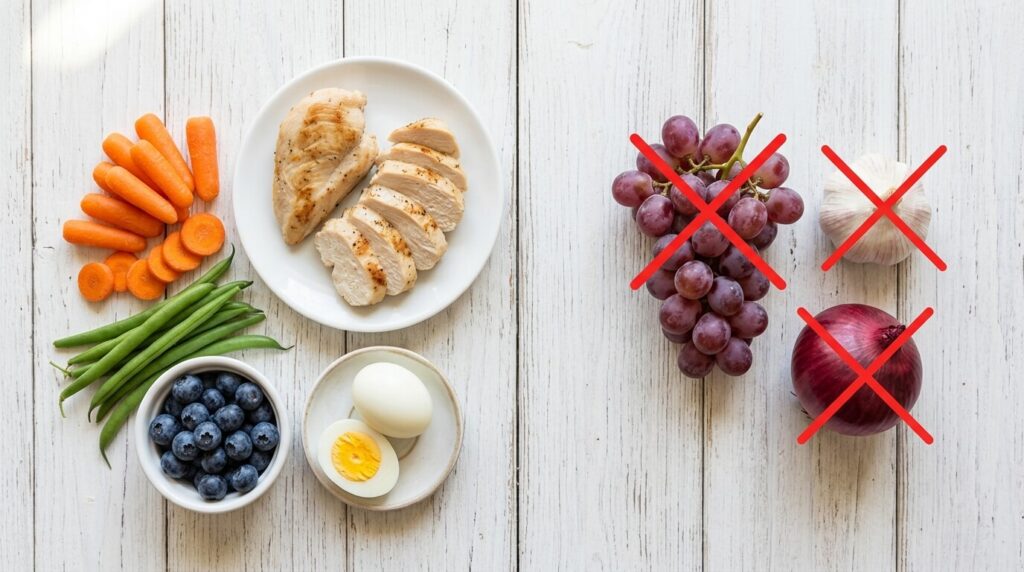
✅ Always safe: Chicken breast, turkey, white fish, salmon (cooked and boneless), lean beef (drained), eggs, brown rice, quinoa, oats, sweet potato, plain canned pumpkin, green beans, carrots, zucchini, broccoli (small amounts), peas, celery, spinach (small amounts), blueberries, apple (flesh only — no seeds or core), cucumber, plain coconut oil (small amounts), fish oil
❌ Never use — toxic to dogs: Onion, garlic, leeks, chives in any form (raw, cooked, or powdered), grapes, raisins, Zante currants, avocado, macadamia nuts, chocolate, xylitol (check every peanut butter and broth label carefully), alcohol, raw yeast dough, nutmeg, excessive salt. The ASPCA Animal Poison Control Center maintains a comprehensive database of foods toxic to dogs — worth bookmarking.
⚠️ Use carefully: Spinach (fine in small amounts for healthy dogs — high in oxalates, so don’t make it a daily staple and avoid entirely for dogs with kidney concerns or a history of bladder stones). Broccoli (fine in small quantities, causes gas in large amounts). Dairy (plain yogurt or cottage cheese is tolerated by many dogs but not all — introduce slowly and watch for loose stools).
The 10 Recipes
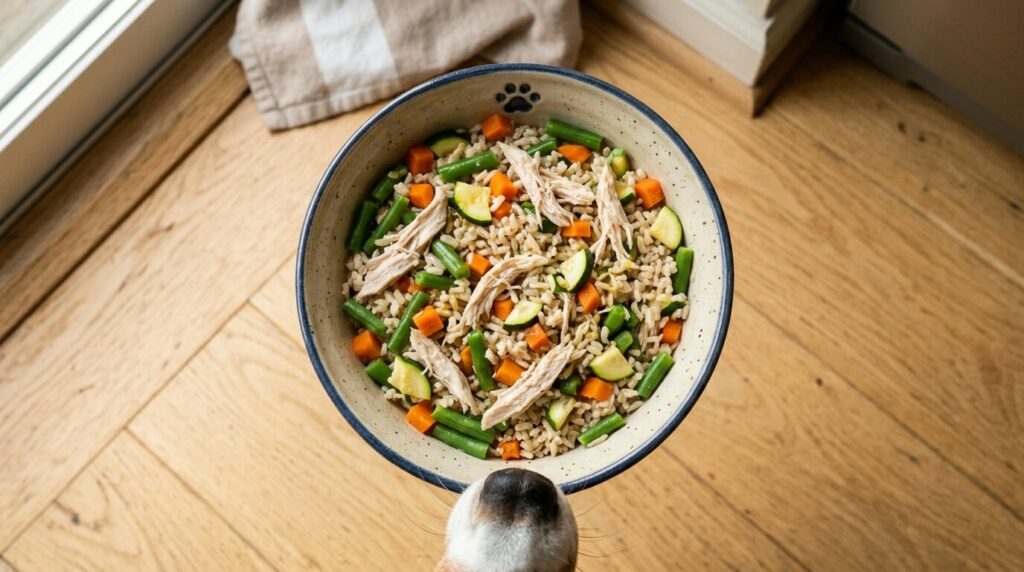
Recipe 1: Classic Lean Chicken & Vegetable Weight Loss Bowl
The foundational recipe — simple, reliable, and almost universally loved
Why it works for weight loss: Chicken breast is one of the leanest proteins available, with approximately 165 calories and 31 grams of protein per 100 grams according to USDA nutritional data. The vegetable mix is heavy on green beans and zucchini — both low calorie and high fibre — so the bowl looks and feels generous while keeping the calorie count genuinely low. Pumpkin slows digestion, supports gut health, and keeps dogs full longer.
This is the recipe to start with. It is where I started Biscuit, and it is where I would tell any new homemade-food dog parent to begin.
Approximate calories per cup: 180–200 kcal Prep time: 15 minutes | Cook time: 30 minutes Makes: Approximately 5–6 cups (4 days of food for a medium dog)
Ingredients:
- 500g boneless skinless chicken breast
- 1 cup brown rice (uncooked — expands to about 2 cups cooked)
- 1 cup green beans, chopped (fresh or plain frozen)
- ½ cup carrots, diced small
- ½ cup zucchini, diced
- ½ cup fresh spinach, roughly chopped
- 2 tablespoons plain canned pumpkin (not pumpkin pie filling)
- 1 teaspoon salmon or sardine fish oil (added after cooking, per serving)
- 2 cups low-sodium chicken broth or plain water (check labels — must be onion-free and garlic-free)
Instructions:
Step 1 — Cook the rice. Start the brown rice first — it takes the longest. Combine 1 cup uncooked rice with 2 cups water in a saucepan. Bring to a boil, reduce to a low simmer, cover, and cook for 35 to 40 minutes until the water is absorbed and the rice is tender. Set aside.
Step 2 — Poach the chicken. Place the chicken breasts in a separate pot and cover with the broth or water. Bring to a boil, then reduce to a simmer. Cook for 15 to 20 minutes depending on thickness, until fully cooked through with no pink remaining. Remove and let cool. Keep the broth — you will use it.
Step 3 — Cook the vegetables. Add the carrots to the reserved broth and simmer for 5 minutes. Add the green beans and zucchini and cook for another 4 to 5 minutes until tender but not mushy. Add the spinach in the very last 2 minutes — it wilts quickly and loses nutrients if overcooked.
Step 4 — Shred and combine. Once the chicken is cool enough to handle, shred it with two forks or dice into small bite-sized pieces. Add the shredded chicken and cooked brown rice back into the pot with the vegetables. Stir in the plain pumpkin. Mix gently until well combined.
Step 5 — Cool completely. This step is non-negotiable. Spread the mixture onto a baking sheet or large plate and let it cool to room temperature before serving or storing. Hot food can burn your dog’s mouth and stomach lining.
Step 6 — Add fish oil per serving. When you are ready to serve a portion, drizzle the fish oil over the top. Do not stir it into the bulk batch — heat and repeated refrigeration degrade omega-3 fatty acids. Add it fresh each time.
Storage: Airtight container in the fridge for up to 4 days. Portion into daily servings and freeze for up to 2 months.
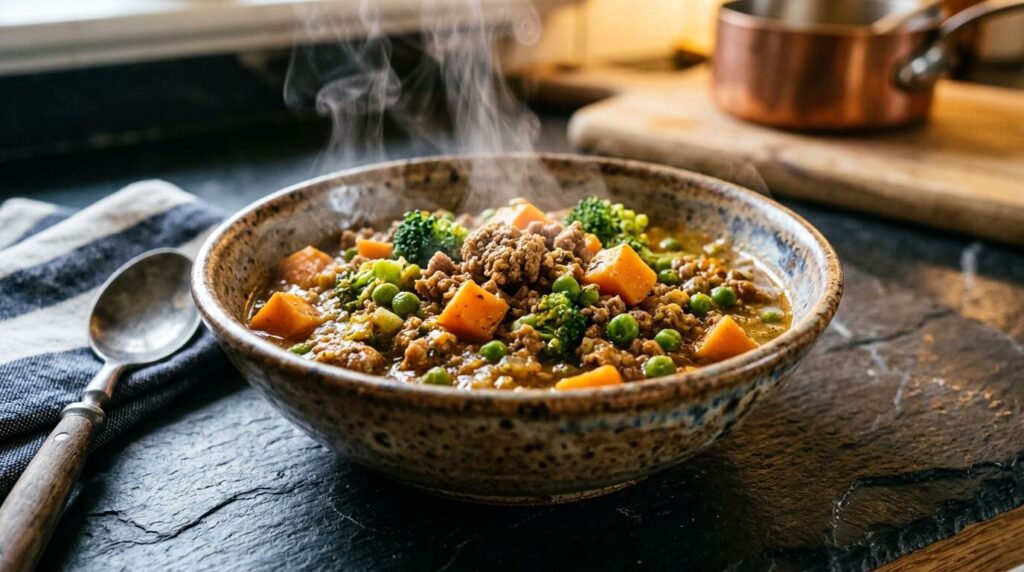
Recipe 2: Turkey & Sweet Potato Lean Stew
Heartier than the chicken bowl — excellent for larger dogs or colder months
Why it works for weight loss: Extra lean ground turkey is high in protein and low in fat when cooking fat is properly drained. Sweet potato adds natural sweetness dogs genuinely love, along with fibre, beta-carotene, and slow-release energy that prevents the blood sugar spikes that trigger hunger. This recipe has a stew-like consistency that many dogs find deeply satisfying — which matters enormously when you are reducing their overall calorie intake and they know it.
Approximate calories per cup: 190–210 kcal Prep time: 10 minutes | Cook time: 30 minutes Makes: Approximately 5–6 cups
Ingredients:
- 500g extra lean ground turkey
- 1 medium sweet potato, peeled and diced (about 1 cup)
- ½ cup frozen peas (plain — no butter, no salt)
- ½ cup broccoli florets, chopped small
- ½ cup celery, sliced thin
- 2 tablespoons plain canned pumpkin
- 1 teaspoon coconut oil (for browning the turkey — minimal amount)
- 2 cups low-sodium chicken or vegetable broth (onion-free, garlic-free)
- 1 teaspoon fish oil (added after cooking, per serving)
Instructions:
Step 1 — Brown the turkey. Heat the coconut oil in a large pot over medium heat. Add the ground turkey and break it apart as it cooks. Cook until completely browned with no pink remaining — about 8 to 10 minutes.
Step 2 — Drain the fat. This step matters for a weight loss recipe. Even lean ground turkey releases fat during cooking. Tilt the pan and spoon out or pour off any excess fat before adding your other ingredients. Don’t skip this.
Step 3 — Add broth and sweet potato. Pour the broth into the pot with the cooked turkey. Add the diced sweet potato and celery. Bring to a simmer and cook for about 10 minutes until the sweet potato begins to soften.
Step 4 — Add remaining vegetables. Add the broccoli florets and peas. Simmer for another 5 to 6 minutes until everything is tender. Don’t overcook the broccoli — it should still hold its shape and colour. Overcooked broccoli is unpleasant for dogs and loses most of its nutritional value.
Step 5 — Stir in pumpkin. Remove from heat and stir in the plain canned pumpkin. The residual heat incorporates it perfectly without additional cooking time.
Step 6 — Cool and serve. Cool completely before serving. Add fish oil per individual portion just before feeding.
Storage: Fridge up to 4 days. Freeze up to 2 months in daily portions.
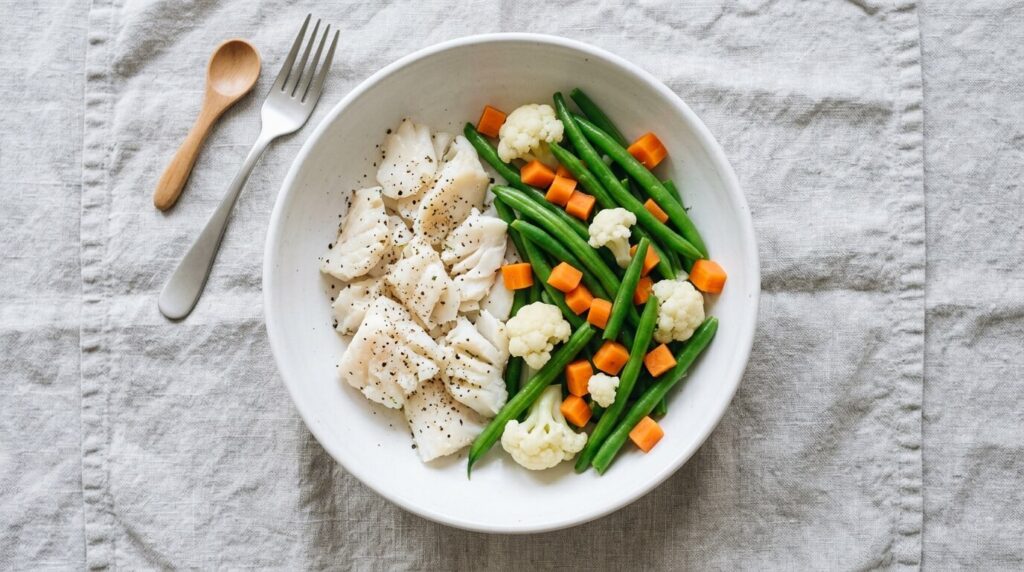
Recipe 3: White Fish & Green Bean Power Bowl
The lowest-calorie recipe on this list — for dogs who need meaningful weight reduction
Why it works for weight loss: White fish is extraordinarily lean — lower in calories than chicken and significantly lower than red meat, while still delivering excellent protein. A 2019 review published in the Journal of Animal Physiology and Animal Nutrition confirmed that high-quality lean protein supports muscle mass retention during caloric restriction in dogs — which is exactly what you want. Green beans are practically a weight loss superfood: roughly 35 calories per cup, extremely high in fibre, and genuinely filling. For dogs who have stalled on other approaches, this combination is worth trying.
Approximate calories per cup: 150–170 kcal Prep time: 10 minutes | Cook time: 20 minutes Makes: Approximately 4–5 cups
Ingredients:
- 500g white fish fillets (cod, tilapia, or hake — fresh or frozen, plain and unseasoned)
- 1½ cups green beans, chopped (fresh or plain frozen)
- ½ cup carrots, diced
- ½ cup cauliflower florets, chopped small
- ¼ cup cooked quinoa (optional — adds protein and fibre, omit for the very lowest calorie version)
- 2 tablespoons plain canned pumpkin
- 2 cups water or very low-sodium fish or vegetable broth
- 1 teaspoon fish oil (added after cooking, per serving)
Instructions:
Step 1 — Poach the fish. Place the fish fillets in a wide pot and cover with water or broth. Bring to a very gentle simmer — not a rolling boil, which makes fish tough and rubbery. Poach for 8 to 10 minutes until the fish flakes easily when pressed gently with a fork. Remove carefully and set aside.
Step 2 — Check for bones. This is not optional. Run your fingers gently through every piece of fish and remove any bones you find. Even “boneless” fillets often contain pin bones. Take your time here.
Step 3 — Cook the vegetables. In the same broth, simmer the carrots and cauliflower for 8 minutes. Add the green beans for the last 4 minutes — you want them tender but still holding their texture.
Step 4 — Flake and combine. Gently flake the fish into small pieces and return them to the pot. Add the cooked quinoa if using, and stir in the pumpkin. Fold rather than stir aggressively — fish breaks apart much more easily than chicken or turkey.
Step 5 — Cool completely and serve. Spread on a baking sheet to cool faster. Add fish oil per portion just before serving.
Storage: Fridge up to 3 days — fish-based recipes do not keep as long as poultry. Do not push it to day 4. Freeze up to 6 weeks.
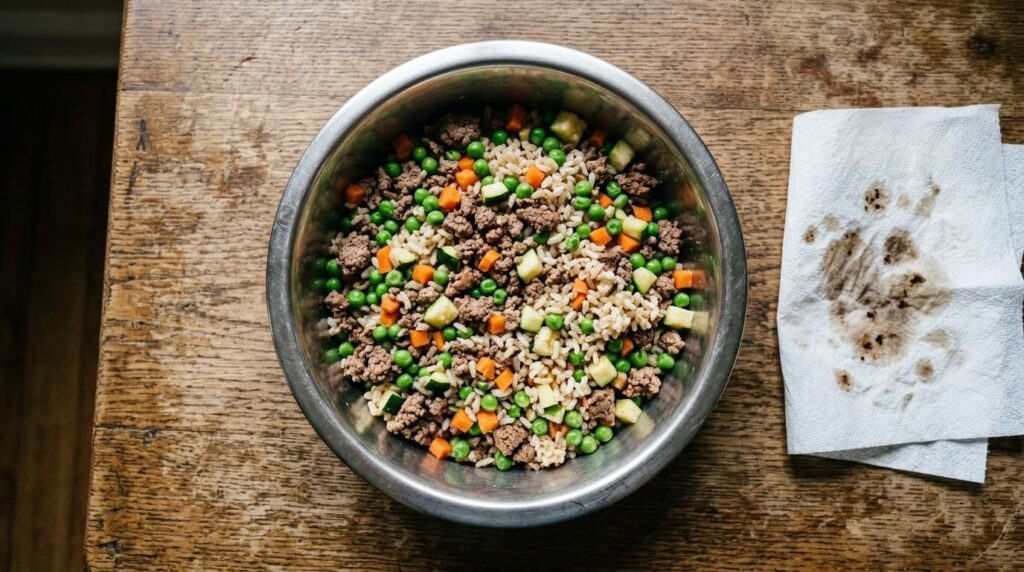
Recipe 4: Lean Beef & Vegetable Stir-Together
For dogs who need a protein rotation away from poultry
Why it works for weight loss: Lean ground beef at 90% lean or higher provides excellent protein, iron, and zinc — nutrients that support muscle retention and immune function during a calorie-restricted period. The key with beef in a weight loss recipe is aggressive fat draining. Even lean ground beef releases more fat during cooking than poultry, and for a weight loss recipe, you remove it rather than leave it in the pot. That single step makes a meaningful calorie difference.
Approximate calories per cup: 200–220 kcal Prep time: 10 minutes | Cook time: 30 minutes Makes: Approximately 5–6 cups
Ingredients:
- 500g lean ground beef (90% lean minimum — 95% lean if you can find it)
- ½ cup brown rice (uncooked)
- ½ cup green beans, chopped
- ½ cup zucchini, diced
- ½ cup peas (plain frozen)
- ½ cup carrots, diced
- 2 tablespoons plain canned pumpkin
- 1½ cups low-sodium beef broth or water (check labels — no onion, no garlic)
- 1 teaspoon fish oil (added after cooking, per serving)
Instructions:
Step 1 — Cook the rice. Cook the brown rice separately in 1 cup of water for 35 to 40 minutes until done. Set aside.
Step 2 — Brown and drain the beef. In a large pot over medium-high heat, cook the ground beef, breaking it apart continuously. Once fully browned, transfer it to a colander lined with paper towels and press gently to remove as much excess fat as possible. This step is essential.
Step 3 — Return beef to pot with broth. Put the drained beef back in the pot, add the broth, and bring to a simmer.
Step 4 — Cook vegetables. Add the carrots first and simmer for 5 minutes. Add green beans, zucchini, and peas. Cook for another 5 to 6 minutes until all vegetables are tender.
Step 5 — Combine and finish. Add the cooked brown rice and plain pumpkin. Stir gently until everything is well combined and the pumpkin is fully incorporated.
Step 6 — Cool completely before serving. Add fish oil per individual portion at serving time.
Storage: Fridge up to 4 days. Freeze up to 2 months in daily portions.
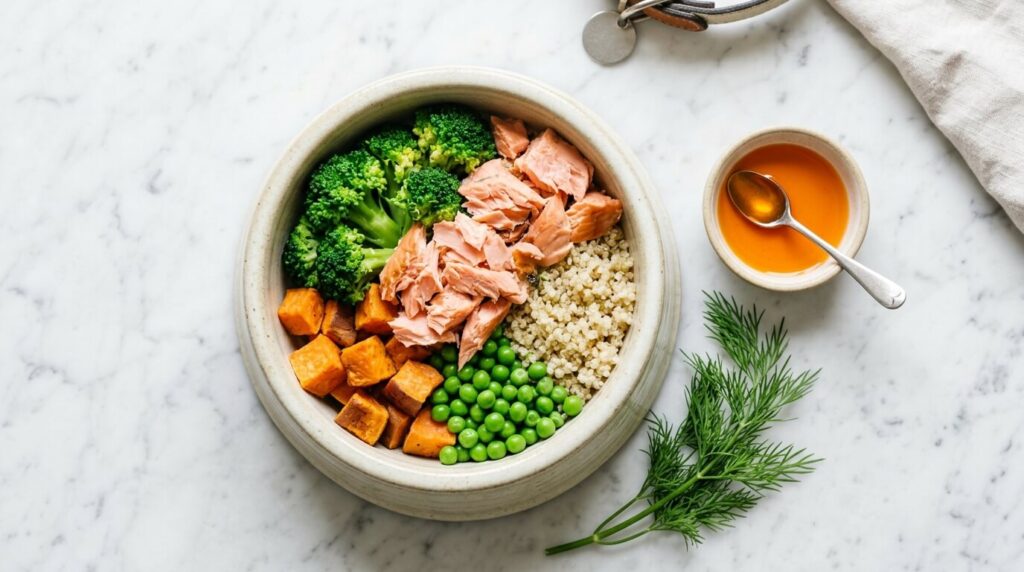
Recipe 5: Salmon & Broccoli Omega Bowl
Anti-inflammatory, joint-supporting, and ideal for older overweight dogs
Why it works for weight loss: Salmon is higher in fat than white fish, but the fat is almost entirely EPA and DHA — the omega-3 fatty acids with documented anti-inflammatory and joint-protective effects. A 90-day randomized controlled study published in BMC Veterinary Research found that dietary omega-3 supplementation significantly improved mobility and weight-bearing ability in dogs with osteoarthritis. For older dogs who are overweight and showing early signs of joint stiffness, this recipe addresses both problems simultaneously. The calorie count runs slightly higher because of the healthy fats, but for the right dog, that is a worthwhile trade.
Approximate calories per cup: 210–230 kcal Prep time: 10 minutes | Cook time: 25 minutes Makes: Approximately 5 cups
Ingredients:
- 400g salmon fillet (fresh or frozen — plain, unseasoned, skin removed)
- 1 cup broccoli florets, chopped small
- ½ cup peas (plain frozen)
- ½ cup sweet potato, diced small
- ½ cup spinach, roughly chopped
- ¼ cup cooked quinoa
- 2 tablespoons plain canned pumpkin
- 1½ cups water or very low-sodium vegetable broth
Instructions:
Step 1 — Bake or poach the salmon. Bake at 190°C/375°F for 15 to 18 minutes wrapped in foil with zero seasoning, or poach gently in water for 10 to 12 minutes. Either method works. No seasoning, no butter, no added oil — the salmon’s natural oils are entirely sufficient.
Step 2 — Check for bones thoroughly. Salmon often contains fine pin bones throughout the fillet. Run your fingers along the flesh carefully and remove every bone you find. Not optional.
Step 3 — Cook the vegetables. In a pot with the broth, simmer sweet potato for 8 minutes. Add broccoli and peas for the next 5 minutes. Add spinach in the final 2 minutes.
Step 4 — Flake and combine. Flake the cooked salmon into small pieces, checking one final time for bones. Combine with the vegetables, cooked quinoa, and pumpkin. Fold gently.
Step 5 — Cool completely. Because this recipe already has an excellent fat profile from the salmon, you can skip the additional fish oil or use just half a teaspoon per serving.
Storage: Fridge up to 3 days. Freeze up to 6 weeks in daily portions.
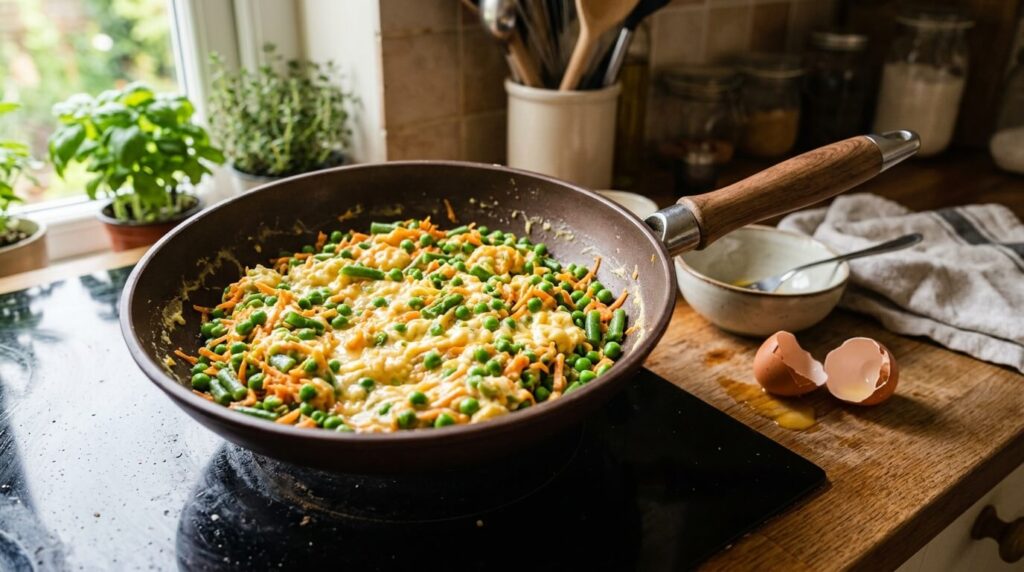
Recipe 6: Egg & Vegetable Protein Scramble
Quick, high-protein, low-calorie — perfect for days when batch cooking hasn’t happened
Why it works for weight loss: Eggs are considered the gold standard of protein quality by veterinary nutritionists — rated at 100% biological value, meaning the body uses essentially all of it. A large egg contains approximately 70 calories and 6 grams of high-quality protein. Because eggs cook in minutes, this recipe is genuinely fast. It is not designed as a daily long-term meal on its own — variety of protein sources matters for complete nutrition — but as a rotation recipe or an emergency when the batch-cooked supply runs out, it is brilliant.
Approximate calories per cup: 160–180 kcal Prep time: 5 minutes | Cook time: 10 minutes Makes: Approximately 2–3 cups (1–2 days for a medium dog)
Ingredients:
- 4 large eggs
- ½ cup green beans, chopped (steamed or microwaved until tender)
- ½ cup carrots, grated or diced very small and softened
- ¼ cup plain canned pumpkin
- ¼ cup peas (plain, cooked)
- 1 teaspoon coconut oil (for cooking)
Instructions:
Step 1 — Prepare the vegetables. Steam or microwave the green beans and carrots until soft — about 4 to 5 minutes in the microwave with a splash of water, covered. Cook the peas if using frozen. Set aside.
Step 2 — Scramble the eggs with no seasoning. Heat the coconut oil in a non-stick pan over medium-low heat. Crack the eggs directly into the pan. Scramble slowly, folding rather than stirring aggressively. Cook until just set. Completely raw is the only state to avoid — raw egg whites contain avidin, a compound that blocks biotin absorption in dogs over time, as confirmed by research published in the Journal of Nutrition.
Step 3 — Combine. Remove the pan from heat. Add the cooked vegetables and pumpkin directly to the scrambled eggs and fold everything together gently.
Step 4 — Cool to lukewarm before serving. Eggs cool faster than stew-style recipes — about 10 minutes at room temperature is sufficient.
Storage: Fridge up to 2 days. This recipe does not freeze well — the egg texture changes noticeably. Make it fresh when you need it.
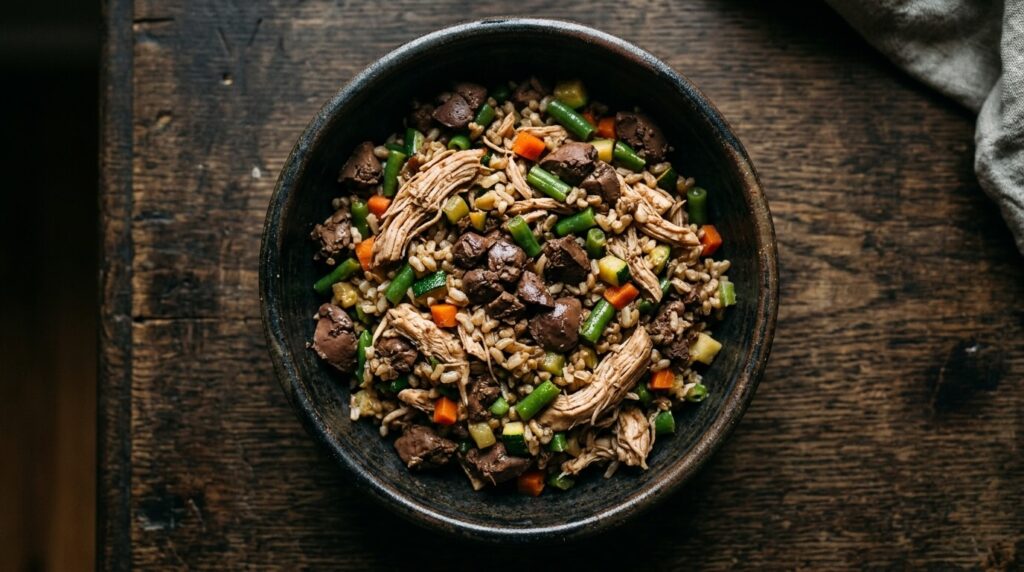
Recipe 7: Chicken Liver & Vegetable Nutrition Boost Bowl
Nutrient-dense and excellent for picky dogs who have been turning their noses up at diet food
Why it works for weight loss: Chicken liver is extraordinarily nutrient-dense — rich in iron, vitamin A, B12, folate, and high-quality protein. It is also intensely palatable. Dogs who have been reluctantly picking at lower-calorie food will usually eat this enthusiastically, which matters when maintaining consistent intake is the challenge. The key is proportional control within the recipe: liver should make up no more than 25 to 30% of the total protein content. Too much liver causes loose stools — you have been warned.
Approximate calories per cup: 185–205 kcal Prep time: 10 minutes | Cook time: 30 minutes Makes: Approximately 5 cups
Ingredients:
- 350g boneless skinless chicken breast
- 150g chicken liver (fresh — rinsed well under cold water)
- 1 cup green beans, chopped
- ½ cup carrots, diced
- ½ cup zucchini, diced
- ½ cup brown rice (cooked separately)
- 2 tablespoons plain canned pumpkin
- 2 cups water (no broth needed — the liver adds plenty of natural flavour)
- 1 teaspoon fish oil (added after cooking, per serving)
Instructions:
Step 1 — Cook the rice. Cook the brown rice separately in 1 cup of water, covered, for 35 to 40 minutes. Set aside.
Step 2 — Poach the chicken breast. Place the chicken breast in a pot with 1½ cups of the water. Bring to a boil, reduce to a simmer, and cook for 15 to 20 minutes until fully cooked. Remove and shred. Keep the broth.
Step 3 — Cook the chicken liver. In the remaining half cup of water, gently simmer the rinsed chicken livers for 8 to 10 minutes until fully cooked through — no pink when you cut one in half. Do not overcook them. They toughen quickly. Remove and chop into very small pieces.
Step 4 — Cook the vegetables. In the combined broth from both cooking steps, simmer the carrots for 5 minutes. Add green beans and zucchini for another 5 minutes until tender.
Step 5 — Combine everything. Add the shredded chicken, chopped liver, cooked brown rice, and plain pumpkin to the pot with the vegetables. Mix gently until well combined.
Step 6 — Cool completely and serve. Add fish oil per serving at mealtime.
Storage: Fridge up to 3 days — liver-based recipes are best used within 3 days. Freeze up to 6 weeks in daily portions.
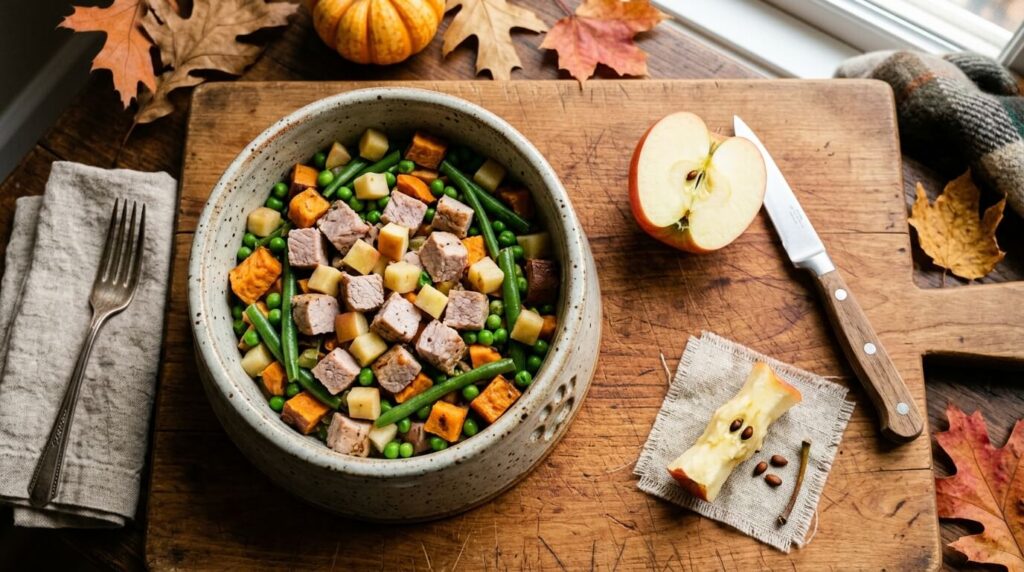
Recipe 8: Lean Pork & Apple Harvest Bowl
A rotation recipe with natural sweetness dogs genuinely love
Why it works for weight loss: Lean pork tenderloin is a surprisingly underused protein in dog nutrition. When all visible fat is trimmed, it is comparable to chicken breast in fat content while offering a completely different flavour profile that keeps dogs interested in their food long term. Apples add natural sweetness, fibre, and vitamin C — and most dogs love them. One absolute rule: remove every seed and the entire core before adding apple to any dog recipe. Apple seeds contain amygdalin, a compound that releases cyanide upon digestion, as noted by the ASPCA’s Animal Poison Control Center.
Approximate calories per cup: 195–215 kcal Prep time: 15 minutes | Cook time: 35 minutes Makes: Approximately 5–6 cups
Ingredients:
- 500g lean pork tenderloin, trimmed of all visible fat
- ½ cup apple, peeled, cored, and diced very small (seeds and core completely removed)
- ½ cup green beans, chopped
- ½ cup sweet potato, diced small
- ½ cup peas (plain frozen)
- ½ cup brown rice (cooked separately)
- 2 tablespoons plain canned pumpkin
- 2 cups low-sodium chicken or vegetable broth (onion-free, garlic-free)
- 1 teaspoon fish oil (added after cooking, per serving)
Instructions:
Step 1 — Cook the rice. Cook brown rice separately using 1 cup rice to 2 cups water, 35 to 40 minutes covered. Set aside.
Step 2 — Cook the pork. Place the trimmed pork tenderloin in a pot with the broth. Bring to a boil, reduce heat, and simmer for 20 to 25 minutes until fully cooked. Internal temperature should reach 71°C/160°F. Remove, let cool, then dice into small cubes or shred with forks. Keep the broth.
Step 3 — Cook the vegetables and apple. In the reserved broth, add sweet potato and simmer for 8 minutes. Add green beans and peas and simmer for another 5 minutes. Add the diced apple in the very last 3 minutes — slightly softened but not mushy.
Step 4 — Combine. Add the cooked pork, brown rice, and pumpkin to the pot. Stir gently until evenly combined.
Step 5 — Cool completely and serve. Add fish oil per individual portion at mealtime.
Storage: Fridge up to 4 days. Freeze up to 2 months in daily portions.
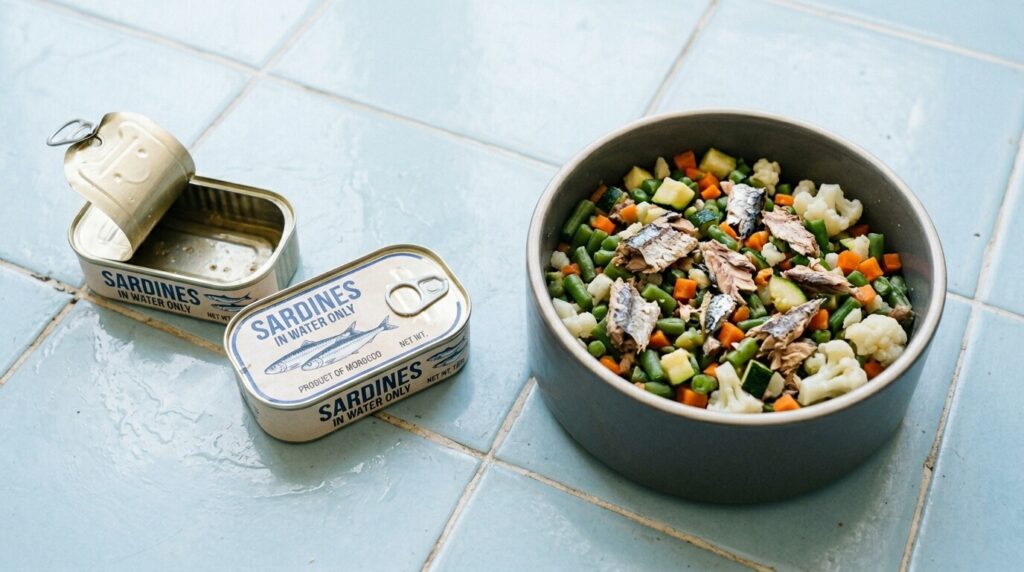
Recipe 9: Sardine & Vegetable Detox Bowl
Budget-friendly, omega-rich, and excellent for dogs with dull coats alongside weight issues
Why it works for weight loss: Canned sardines in water — not oil, not brine, water only — are one of the most affordable and nutritionally complete proteins you can put in a dog’s bowl. They are rich in EPA and DHA omega-3 fatty acids, calcium from the soft edible bones, vitamin D, and B12. The Colorado State University Veterinary Teaching Hospital cites EPA and DHA from marine sources as among the most beneficial dietary additions for dogs with inflammatory conditions and coat issues — and sardines deliver both at a fraction of the cost of salmon. This recipe costs a fraction of the salmon bowl while delivering comparable omega benefits.
Approximate calories per cup: 170–190 kcal Prep time: 10 minutes | Cook time: 20 minutes Makes: Approximately 4–5 cups
Ingredients:
- 2 cans sardines in water (120g each — water only, no added salt, no oil, no brine)
- 1 cup green beans, chopped
- ½ cup carrots, diced
- ½ cup zucchini, diced
- ½ cup cauliflower, chopped small
- ¼ cup cooked brown rice or quinoa
- 2 tablespoons plain canned pumpkin
- 1 cup water or very low-sodium vegetable broth
Instructions:
Step 1 — Check the sardine cans carefully. The label must say “in water” and must not list salt, brine, oil, tomato sauce, or any added flavourings. If you can only find sardines in oil or with added salt, drain and rinse them thoroughly under cold running water before using.
Step 2 — Cook the vegetables. In a pot with the water or broth, simmer carrots for 5 minutes. Add green beans, zucchini, and cauliflower. Cook for another 5 to 6 minutes until all vegetables are tender.
Step 3 — Add sardines. Drain the cans and add the sardines to the pot. Break them apart gently with a fork — they are soft and will naturally flake into small pieces. The soft bones in canned sardines are completely safe and provide a valuable calcium source, so do not try to remove them.
Step 4 — Add rice and pumpkin. Stir in the cooked brown rice or quinoa and the plain pumpkin. Fold everything together gently and remove from heat.
Step 5 — Cool completely before serving. No additional fish oil needed with this recipe — sardines provide abundant omega-3s on their own.
Storage: Fridge up to 3 days. Freeze up to 6 weeks in daily portions.
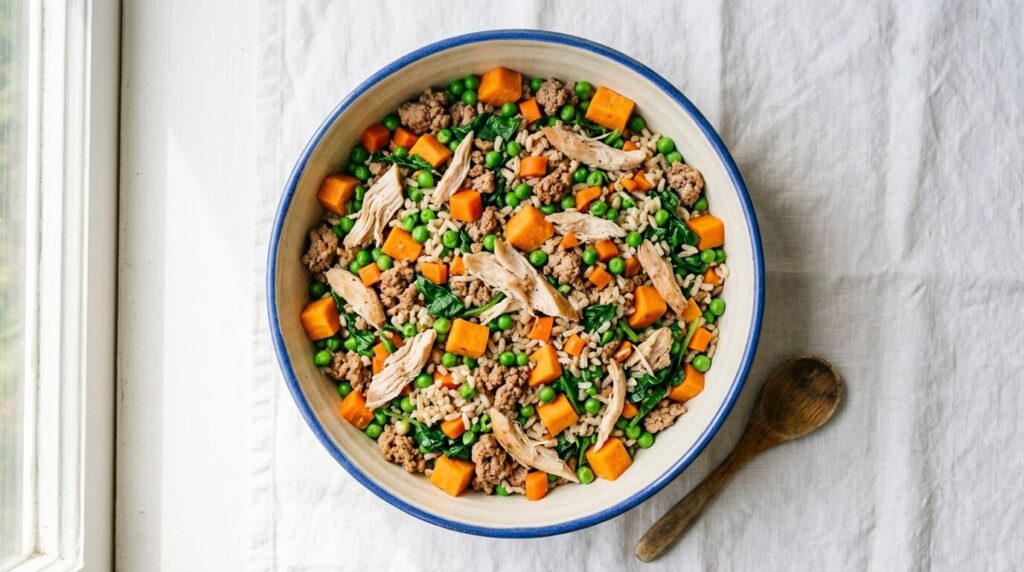
Recipe 10: Mixed Protein Rainbow Bowl
The rotation recipe — multiple proteins and a rainbow of vegetables for maximum nutritional variety
Why it works for weight loss: Long-term homemade feeding works best with variety, and this recipe is built specifically around that principle. No single protein source covers every amino acid, mineral, and micronutrient perfectly. This recipe deliberately combines two lean proteins with a wide range of vegetables chosen to cover different nutritional bases: carrots for beta-carotene, spinach for iron and folate, peas for plant protein, sweet potato for potassium and fibre, and pumpkin for gut health and digestive regularity. It is the nutritional reset bowl — the one to come back to at the end of every rotation cycle.
Approximate calories per cup: 195–215 kcal Prep time: 15 minutes | Cook time: 35 minutes Makes: Approximately 6–7 cups
Ingredients:
- 300g boneless skinless chicken breast
- 200g extra lean ground turkey
- ½ cup sweet potato, diced small
- ½ cup green beans, chopped
- ½ cup carrots, diced
- ½ cup peas (plain frozen)
- ½ cup spinach, roughly chopped
- ¼ cup brown rice (cooked separately)
- 2 tablespoons plain canned pumpkin
- 2 cups low-sodium chicken broth (onion-free, garlic-free) or water
- 1 teaspoon fish oil (added after cooking, per serving)
Instructions:
Step 1 — Cook the rice. Cook the brown rice with ½ cup water in a small covered saucepan for 35 to 40 minutes. Set aside.
Step 2 — Poach the chicken. Place chicken breast in the broth and bring to a simmer. Cook for 15 to 20 minutes until fully cooked. Remove, cool slightly, and shred. Reserve all the broth.
Step 3 — Cook the ground turkey. In a separate pan over medium heat, dry cook the ground turkey with no added oil until fully browned, breaking it apart as it cooks. Drain any excess fat from the pan.
Step 4 — Cook the vegetables in the reserved broth. Bring the broth back to a simmer. Add sweet potato and carrots first — 8 minutes. Add green beans and peas — 5 minutes. Add spinach in the very last 2 minutes.
Step 5 — Combine everything. Add both proteins to the pot. Add the brown rice and pumpkin. Stir gently until everything is evenly distributed.
Step 6 — Cool completely. Spread across a baking sheet to cool faster. Add fish oil per individual serving at mealtime.
Storage: Fridge up to 4 days. Freeze up to 2 months — this one freezes particularly well because of the varied textures.
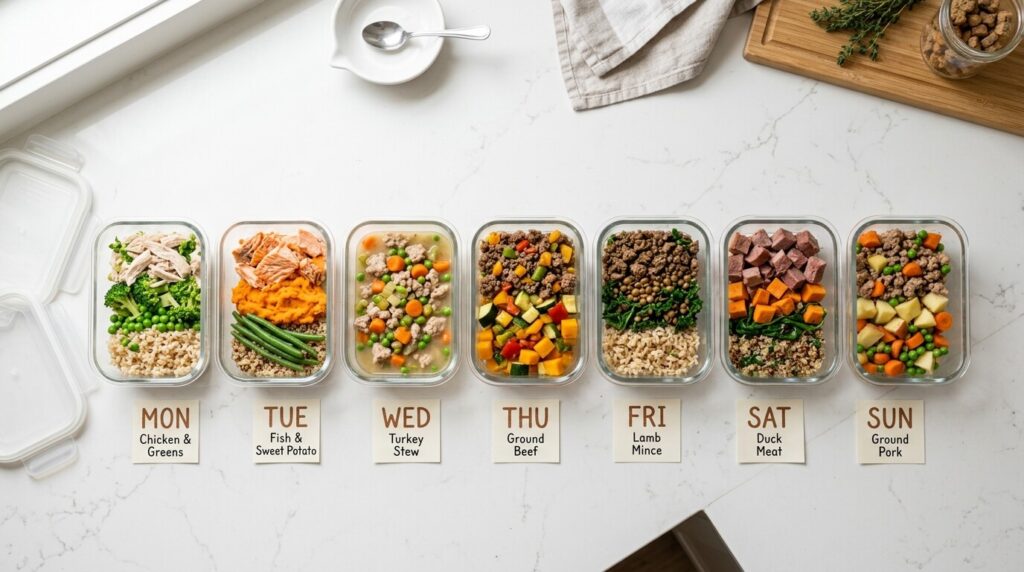
The Protein Rotation Schedule — How to Use All 10 Recipes Together
One of the most common questions from owners who start cooking homemade food is how often to switch recipes.
Here is the rotation I use for Biscuit — and what I would suggest as a practical starting framework:
- Week 1: Recipe 1 (Chicken & Vegetable) — establish the baseline, see how your dog tolerates the transition
- Week 2: Recipe 3 (White Fish & Green Beans) — introduce fish protein, the lowest-calorie option
- Week 3: Recipe 2 (Turkey & Sweet Potato) — add variety, slightly heartier
- Week 4: Recipe 10 (Mixed Protein Rainbow Bowl) — the nutritional reset
Then cycle through the remaining recipes in subsequent months, working in the egg scramble (Recipe 6) as a quick backup whenever batch cooking hasn’t happened.
This approach ensures protein variety, prevents what canine nutritionists sometimes call flavour fatigue (dogs absolutely do get bored of the same food), and covers a broad spectrum of micronutrients over time.
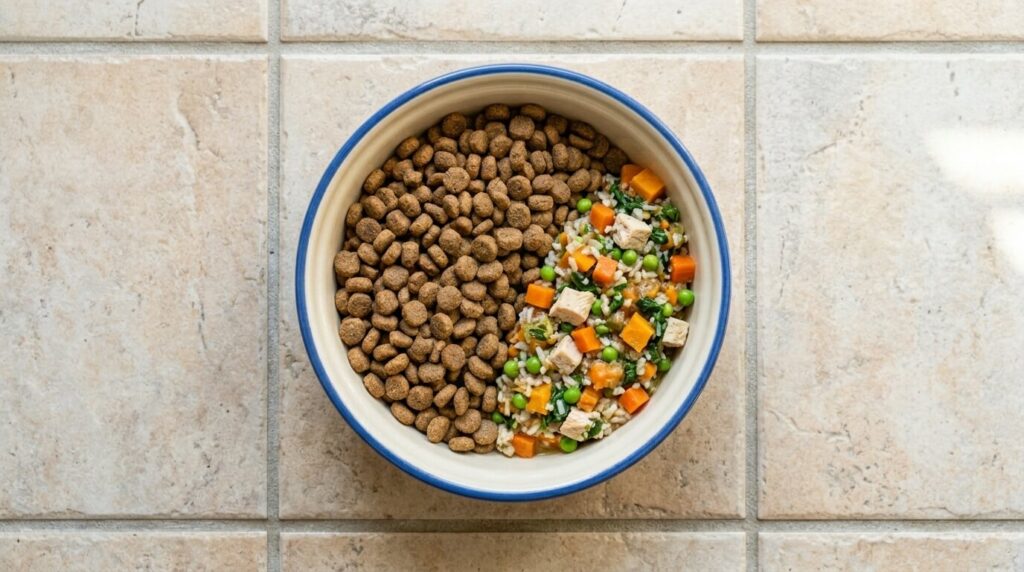
How to Transition From Kibble to Homemade Food
Do not do this overnight. A sudden food switch causes digestive upset in almost every dog — loose stools, gas, vomiting, the full unpleasant picture. A gradual transition is kinder to your dog’s gut microbiome and gives you better information about how they are tolerating the change.
- Days 1–3: 75% current kibble + 25% homemade food
- Days 4–6: 50% kibble + 50% homemade food
- Days 7–9: 25% kibble + 75% homemade food
- Day 10 onwards: 100% homemade food
If your dog has a sensitive stomach, extend each phase by 2 to 3 days. There is no prize for rushing this.
Some dogs experience brief loose stools even with a slow transition — this is usually normal and resolves within a week. If it persists beyond 10 days or is accompanied by vomiting, loss of appetite, or lethargy, call your vet. Those symptoms together are not normal transition symptoms.
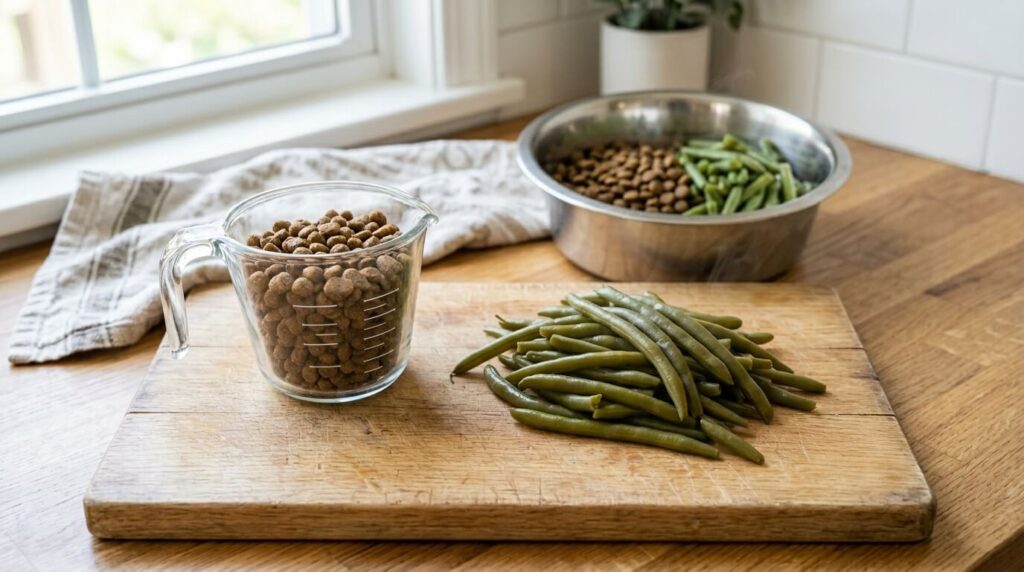
The Green Bean Method — A Quick Win Worth Mentioning
Before you even start batch cooking full recipes, here is a simple technique that many veterinarians recommend as a first step for overweight dogs: the green bean replacement method.
Replace 10 to 20% of your dog’s current kibble volume with plain cooked green beans. Not added on top of their normal portion — replacing part of the kibble with the beans. Your dog’s bowl looks the same size. They eat roughly the same volume. But the calorie count drops significantly because plain green beans contain approximately 35 calories per cup versus 380 calories per cup for most standard kibbles.
It sounds almost too simple. It works anyway. It is a legitimate bridge strategy while you build the habit of batch cooking.
What to Expect: The Weight Loss Timeline
Patience is the ingredient that makes all the others work.
Safe weight loss in dogs sits at 1 to 2% of body weight per week, according to veterinary internal medicine guidelines. A 25kg dog who needs to lose 5kg is looking at roughly 3 to 5 months of consistent effort. For older dogs, certain breeds with known metabolic predispositions (Labradors, Beagles, Pugs, Cocker Spaniels, Basset Hounds), and spayed or neutered dogs, the timeline is often longer because their resting metabolic rates are lower.
Monthly weigh-ins — most vet clinics will let you stop in just for the scale without a full appointment — give you real data to work with rather than guessing by eye. If your dog has not lost any weight after 6 to 8 weeks of genuinely following these portions and recipes, go back to your vet. Sometimes there is an underlying thyroid or metabolic issue that needs addressing before dietary changes will make a measurable difference. Hypothyroidism in particular is a common and frequently missed cause of weight resistance in dogs.
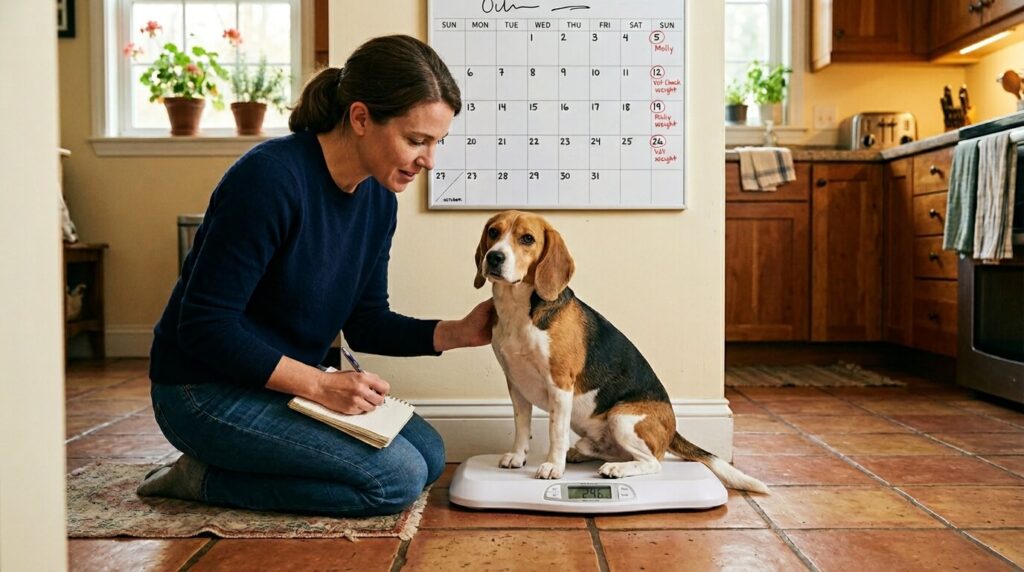
The signs that things are working often show up before the scale moves significantly. You can feel the ribs without pressing hard but cannot see them. Your dog moves more freely. They have more energy on walks. They seem generally brighter and more engaged with daily life. Trust those signs — they are telling you something real.
A Few Important Reminders Before You Cook
Introduce new foods one at a time and in gradual amounts — your dog’s digestive system needs time to adjust. Every dog is different, and what works beautifully for one may cause issues for another. These recipes support health — they do not replace veterinary care. If your dog is seriously unwell, your vet comes first, always. And if your dog has any existing health condition — kidney disease, diabetes, pancreatitis, allergies — talk to your vet before making significant dietary changes. Some conditions require specific dietary modifications that these general recipes do not account for.
For dogs with kidney disease specifically, the phosphorus and protein considerations are different from what is outlined here. See our article on kidney disease in dogs for the specific dietary guidance that applies to that situation.
Honest Final Thoughts
Cooking for your dog feels like a lot at first. And the first few batch-cooking sessions are genuinely a bit chaotic — at least in this house, with a beagle hovering approximately six inches from my feet the entire time and me trying to follow a recipe while simultaneously defending carrots from the cutting board.
But it becomes a rhythm quickly. Most of these recipes take about 40 minutes to cook and give you 4 to 5 days of food. That is less than 10 minutes of effort per day when you average it out. And the peace of mind that comes from knowing exactly what your dog is eating is genuinely worth it.
Biscuit has been on a rotation of these recipes for eight months. He has lost the weight he needed to lose. His coat is better than it has ever been. And — this is the part that gets me — he moves like a younger dog. The stiffness that was starting to creep into his morning routine is mostly gone.
Whether you try one recipe or all ten, whether you go fully homemade or use these alongside a good commercial diet — any step toward better, more intentional nutrition is a step in the right direction for your dog.
You’ve got this. And so does your dog.
At For Better For Dogs, we believe that understanding your dog — really understanding them — is the most powerful form of care there is. Drop a comment below and tell us which recipe you tried first and how your dog responded. We read every single one.