
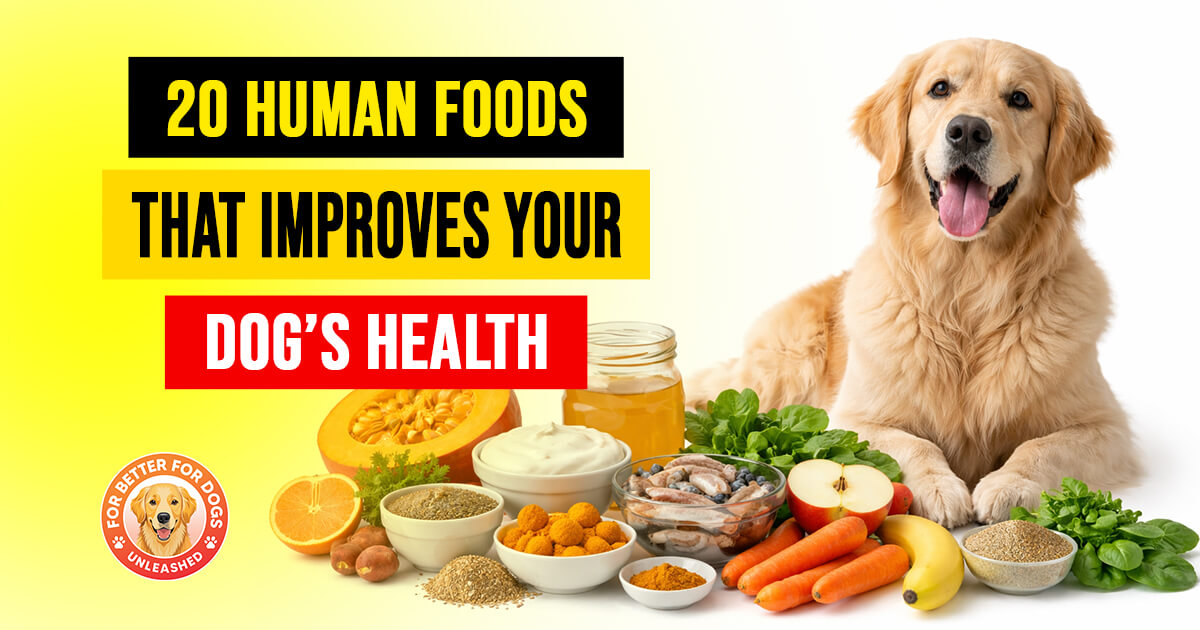
Let me tell you something that took me way too long to figure out. The answer to half of what your dog is struggling with — the dull coat, the stiff joints, the upset stomach, the itchy skin, the foggy eyes in an aging dog — is probably already sitting in your kitchen right now. Not in a supplement bottle. Not behind a vet’s prescription pad. In your fridge. Your pantry. Your spice rack.
Most owners have no idea. And most vets, unless you specifically ask, won’t bring it up in a ten-minute appointment focused on vaccines and parasite prevention.
So we’re going to talk about it here. Twenty human foods that veterinary research confirms can genuinely change your dog’s health — what each one does, exactly how much to give, and which ones to reach for first based on what your dog is actually dealing with right now.
Everything here is backed by veterinary research and published studies. Not Facebook groups. Not anecdotes. Real science, explained in plain language. Let’s get into it.
Table of Contents
Before we start: a quick note on sourcing. Every food on this list is supported by veterinary research or published nutritional science. These are not folk remedies or internet myths. Where studies are referenced, they are real. And none of this replaces your vet — it works alongside them.

1. Eggs — The Gold Standard of Dog Nutrition
There is one food that veterinary nutritionists consistently rank above every other protein source for dogs. Not chicken. Not beef. Not the premium kibble with the fancy label.
A single egg contains every essential amino acid a dog’s body needs to repair muscle, maintain lean mass, and stay strong — in one complete package. The protein digestibility of egg is rated at 100% by veterinary nutritionists, meaning your dog’s body uses virtually all of it. Nothing goes to waste.
But the benefit most owners completely miss is biotin — a B vitamin found in abundance in eggs that directly governs coat health and hair growth. If your dog is shedding excessively, has a coat that looks dull or feels rough, or has patches that seem thin for no obvious reason, one scrambled egg three times a week can produce a visible difference within 30 days. Before you spend $40 on a coat supplement, start here.
One critical rule: always cook them. Raw eggs contain avidin, a compound that blocks biotin absorption entirely — it cancels out the exact benefit you are trying to get. Scrambled, hard-boiled, poached — the method does not matter. Just never raw.
2. Turmeric — Nature’s Anti-Inflammatory
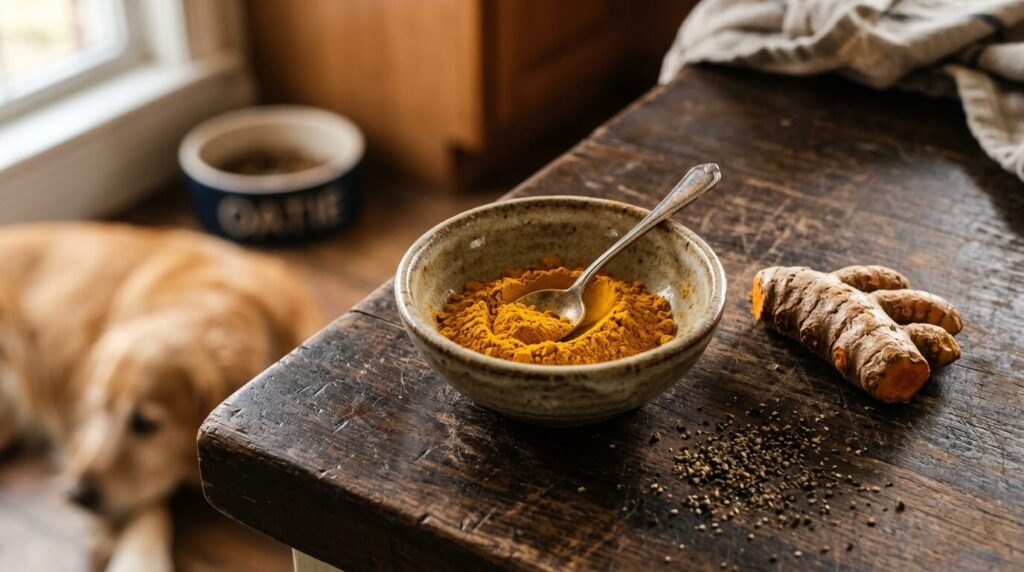
Turmeric contains a compound called curcumin. A 2012 study published in the Veterinary Immunology and Immunopathology found that curcumin reduced inflammation markers in osteoarthritic dogs, acting on more pathways than a prescription NSAID in some cases; more like curcumin performed comparably to certain pharmaceutical anti-inflammatory medications in reducing joint pain in dogs — without the side effects that come with long-term NSAID use. That is a significant finding. Peer-reviewed. Published. Real.
For dogs with arthritis, visible stiffness, or any hesitation before climbing stairs or getting up from rest — mix an eighth to a quarter teaspoon of turmeric powder into their food every day.
Here is the part almost everyone misses: add a small pinch of black pepper at the same time. The piperine in black pepper increases the body’s absorption of curcumin by up to 2,000%. That number is not a typo. The same dose becomes dramatically more powerful with one pinch of a spice you already have. Give it two to three weeks consistently and watch how your dog moves.
3. Sardines — The Aisle You Always Skip
You walk through the grocery store. You pass the canned fish aisle. You probably don’t even slow down. Every time you do that, your dog misses out on something genuinely powerful.
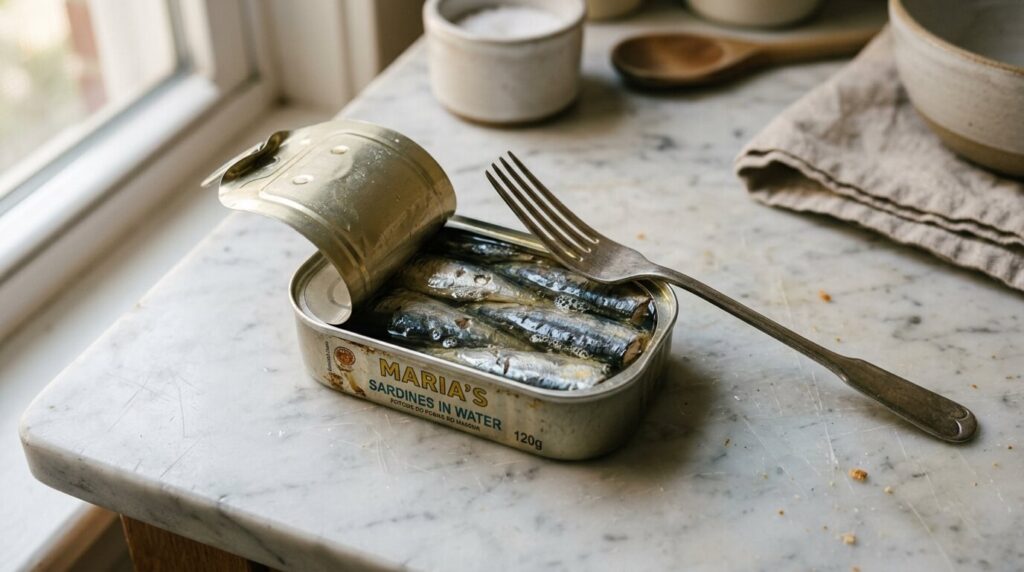
Sardines packed in water — not oil, not brine, just water — are one of the richest natural sources of omega-3 fatty acids available anywhere, at any price point. And omega-3 fatty acids do three things that almost nothing else replicates:
They reduce systemic inflammation — the kind that quietly damages joints, organs, and skin from the inside without obvious symptoms until the damage is already done. They transform coat condition from the inside out — a study from CSU Veterinary Teaching Hospital found measurable improvement in coat thickness and shine in dogs receiving regular omega-3 supplementation within just six weeks. And they actively support brain development in puppies while maintaining cognitive sharpness in adult and senior dogs.
One small sardine, two to three times a week. Under two dollars. Your dog will be more excited about it than almost anything else in their bowl.
4. Sweet Potato — The Ground-Grown Multivitamin
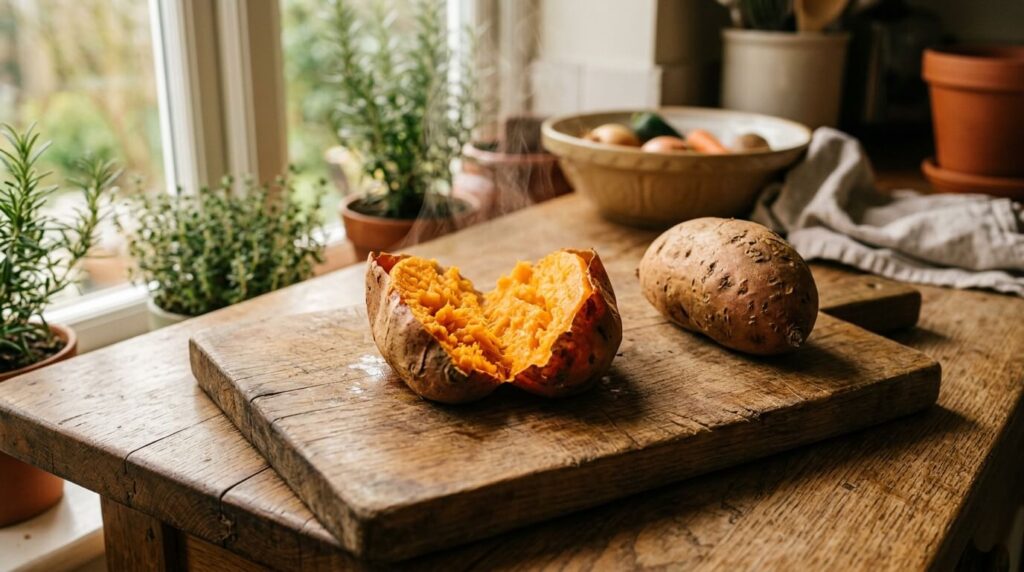
Think of sweet potato as a multivitamin that comes straight out of the ground — no capsule, no powder, no $35 price tag attached. One cooked sweet potato delivers five genuinely important nutrients in a single ingredient:
- Vitamin A — for vision and immune function.
- Vitamin C — for cellular repair.
- Vitamin B6 — for brain chemistry and nerve signaling.
- Potassium — for heart and muscle health.
- Dietary fiber — for consistent, smooth digestion.
Dogs with frequently unsettled stomachs, aging eyes, or a weakened immune system benefit enormously from this added to their regular meals. Boil it or bake it — no butter, no salt, no seasoning. Two to three tablespoons for a medium-sized dog, mixed straight into the bowl.
Simple. Cheap. Genuinely effective.

5. Ginger — For the Dog Who Dreads the Car
Does your dog pace and drool before vet visits? Vomit in the car? Or suddenly become nauseous with no obvious trigger, leaving you completely baffled? This is what you have been missing.
AKC — Can Dogs Eat Ginger? confirmed that small doses of ginger significantly reduce nausea and vomiting in dogs — through the same mechanism it works in humans. The active compounds, gingerols and shogaols, calm the stomach lining and reduce gut inflammation directly at the source.
Grate a small amount of fresh ginger and mix it into your dog’s food about 20 minutes before a car trip or any stressful situation.
Dosage matters here — and this is where most owners go wrong. A quarter teaspoon for small dogs, half a teaspoon maximum for large breeds. Go above that and you reverse the effect entirely, causing stomach upset instead of relief. Small, precise dose. Real results.

6. Bone Broth — The Healer in a Bowl
When a dog stops eating after surgery, illness, or a difficult recovery — getting any nutrition into them becomes the challenge. Bone broth solves that problem better than almost anything else because the smell alone draws even the most reluctant eater back to the bowl.
But that is only the beginning of what bone broth does. It is rich in collagen, glucosamine, chondroitin, and glycine — compounds that rebuild joint cartilage, repair the gut lining, and reduce inflammation across the body over time. Regular use supports digestive health and joint mobility even in completely healthy dogs.
To make it: simmer beef or chicken bones for 20 to 24 hours in water with a splash of apple cider vinegar — the acid draws minerals and collagen out of the bones and into the liquid. Strain, cool, and pour over food or serve warm on its own.
Store-bought versions work too. Just check the label carefully: no onion, no garlic, no added salt. Those three things make an otherwise healing food harmful.

7. Pumpkin — The Food That Fixes Both Problems at Once
Plain canned pumpkin — and be specific here: not pumpkin pie filling, not anything with spices, sweeteners, or added flavoring — just pure 100% pumpkin — is one of the most dependable natural remedies for digestive issues in dogs. And what makes it remarkable is that it works in both directions.
Loose stools? The soluble fiber absorbs excess moisture in an overactive gut and firms things up. Constipation? That same fiber draws water into the colon and gets movement happening again naturally. The same food solving two opposite problems tells you something about how intelligently it works.
Beyond digestion, pumpkin is rich in beta-carotene, zinc, and vitamin C — providing ongoing support for immunity and skin health even when your dog’s gut is functioning perfectly.
One to four tablespoons depending on your dog’s size, mixed into food. This should be in every dog owner’s pantry permanently.
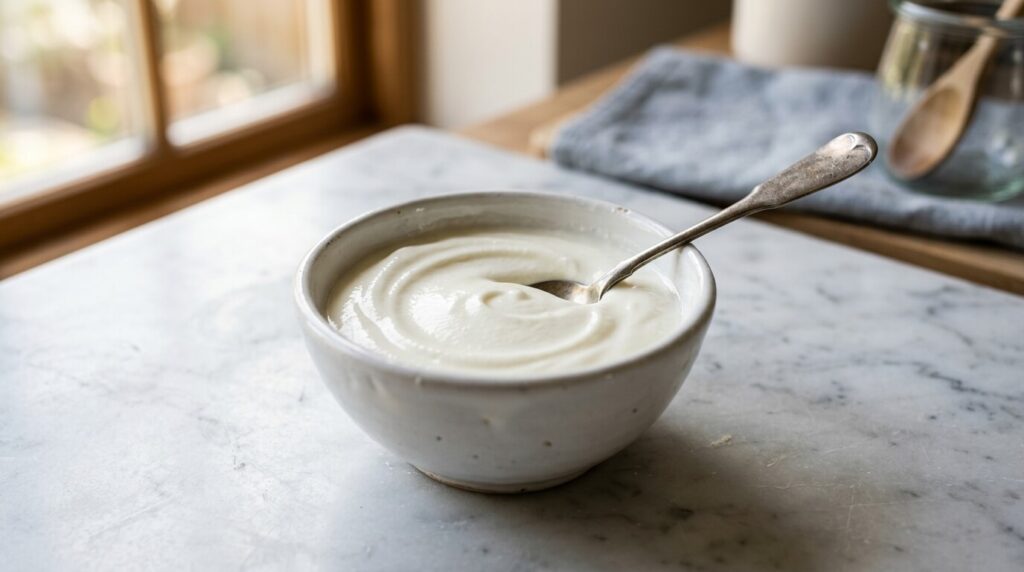
8. Plain Greek Yogurt — The Gut Rebuilder
Here is something vets will absolutely agree with when you bring it up — they just rarely bring it up themselves. Plain Greek yogurt — no artificial sweeteners, no fruit flavoring, and absolutely no xylitol, which is toxic to dogs — is one of the richest natural sources of probiotics you can put in your dog’s bowl.
Here is why that matters more than most people realize. Your dog’s immune system is approximately 70% based in the gut. Not in the blood. Not in the organs. In the gut. When the bacterial balance there gets disrupted — through stress, antibiotics, illness, or poor diet — the effects show up everywhere. Skin allergies flare up. Ear infections become recurring. Digestion becomes unpredictable. Energy drops. Mood changes.
Daily probiotics from plain Greek yogurt rebuild that bacterial balance from the inside out. One to two tablespoons mixed into food daily. Straightforward, affordable, and genuinely effective.

9. Carrots — The Natural Toothbrush
Most owners who give carrots think of them as a low-calorie treat and leave it there. They are missing what is actually happening every time their dog chews one.
The firm texture of a raw carrot physically scrapes plaque and tartar off the teeth as your dog chews. It is mechanical cleaning — the same basic principle as a toothbrush, delivered through a snack your dog is usually thrilled about. A study from the University of Edinburgh’s Royal School of Veterinary Studies confirmed that dogs who regularly chewed raw vegetables showed significantly less dental disease over time compared to dogs that did not.
On top of the dental benefit, carrots are dense with beta-carotene, which the body converts directly into vitamin A — supporting vision, immune strength, and skin health all at once.
One medium raw carrot daily. No prep needed. Most dogs love the crunch far more than you would expect.

10. Oatmeal — The Skin Soother That Works Two Ways
If your dog has skin that itches constantly, flakes, goes red, or breaks out in rashes — and you have tried medicated shampoos, changed their food, bought supplements, and nothing has stuck — you may have been looking for the solution in the wrong direction entirely.
Plain cooked oatmeal contains compounds called avenanthramides — found almost nowhere else in nature — that directly reduce skin inflammation and soothe irritation. And uniquely, oatmeal can deliver that benefit in two completely different ways:
- Internally: two to three tablespoons of plain cooked oatmeal mixed into food three times a week for ongoing skin support from the inside.
- Topically: during a flare-up, make a paste with cooked oatmeal, apply it directly to the irritated area, leave it for ten minutes, then rinse. Immediate, visible relief.
Veterinary dermatologists at NC State’s College of Veterinary Medicine regularly recommend oatmeal-based treatments as a first-line response for dogs with chronic skin allergies. No sugar, no flavoring, no instant oat packets. Plain oatmeal only.

11. Kefir — Greek Yogurt’s More Powerful Cousin
You already know Greek yogurt is good for your dog’s gut. Kefir does the same job — but at a completely different level of intensity.
Where regular yogurt delivers somewhere between 2 and 7 strains of beneficial bacteria, kefir can contain up to 61 distinct strains. More diversity means broader coverage across the gut microbiome, stronger immune defense, and significantly faster recovery when the system gets disrupted by antibiotics, illness, or stress.
A study published in the Journal of Animal Physiology and Animal Nutrition found measurable improvement in dogs’ gut microbiome diversity within just 14 days of kefir supplementation — alongside reduced inflammation, better coat condition, and improved energy levels.
Plain, unsweetened kefir only. No fruit flavors, nothing added. One to two tablespoons daily for smaller dogs, two to four for larger breeds. Most dogs adjust to the slightly tangy taste almost immediately.
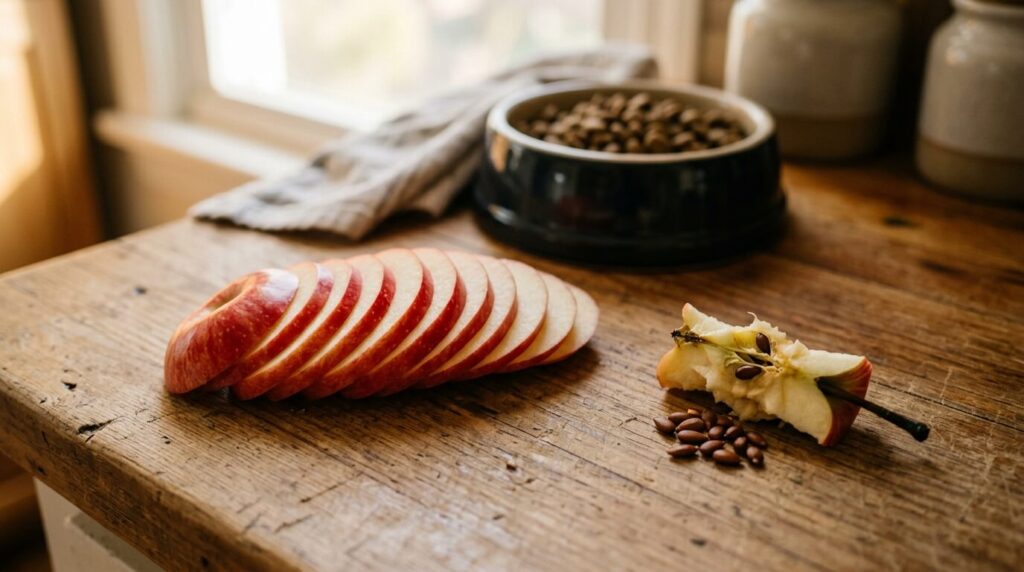
12. Apple — The Natural Antihistamine
Most owners are vaguely unsure whether apples are even safe for dogs. They are. Completely safe. And they are doing something most people never expect.
Apples provide vitamin C, vitamin A, and dietary fiber — and that fiber acts as a prebiotic, feeding the beneficial bacteria that Greek yogurt and kefir help establish. These foods genuinely amplify each other when used together consistently.
The benefit that surprises people most: apples contain quercetin, a natural antihistamine compound. Dogs with seasonal allergies — scratching constantly, rubbing their face on the carpet, dealing with watery eyes or sneezing fits — respond well to regular apple because quercetin naturally suppresses the allergic response without any medication required.
One non-negotiable rule: remove the core and all seeds completely before giving apple to your dog. Apple seeds contain trace amounts of cyanide that accumulate with repeated exposure. Just the flesh, sliced thin. Two to three slices daily.
13. Chia Seeds — Small Package, Enormous Benefit
This is probably the most underestimated food on this entire list. And it deserves far more attention than it gets.
One tablespoon of chia seeds delivers more omega-3 fatty acids than most commercial fish oil supplements on the market. It also provides calcium, phosphorus, magnesium, and antioxidants — supporting bone density, joint repair, and cellular health in a way that builds quietly and consistently over time.
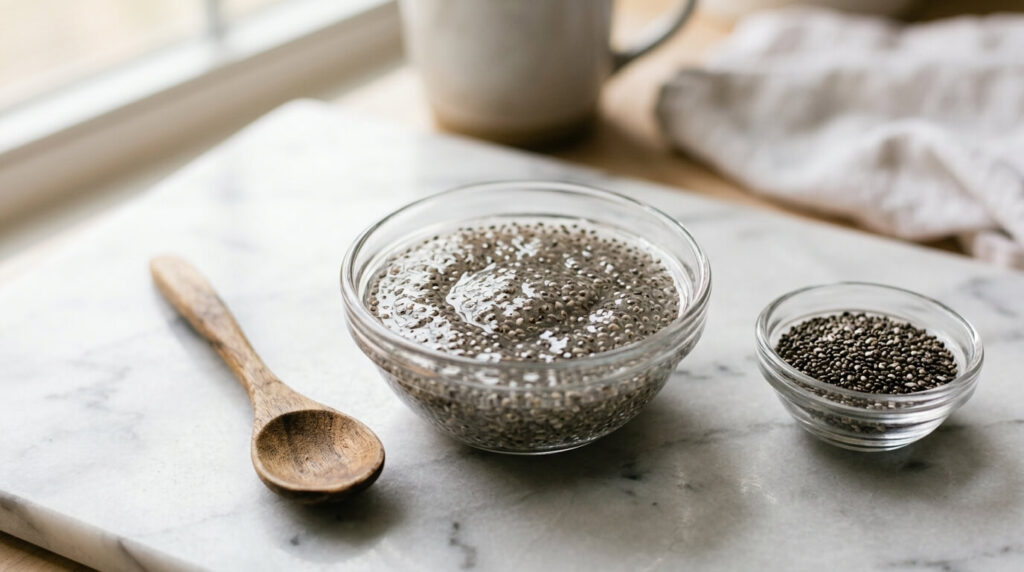
What makes chia seeds uniquely valuable for dogs is what happens when they contact water. They form a thick gel — and that gel slows digestion, stabilizes blood sugar, and prevents the energy spike-and-crash pattern many dogs show after meals. For diabetic dogs, or dogs that go absolutely frantic right after eating and then crash completely an hour later, this is genuinely significant.
Half a teaspoon for small dogs, one teaspoon for large dogs. Soak in water for ten minutes first to form the gel, then mix into food. Daily. The benefits compound over time.
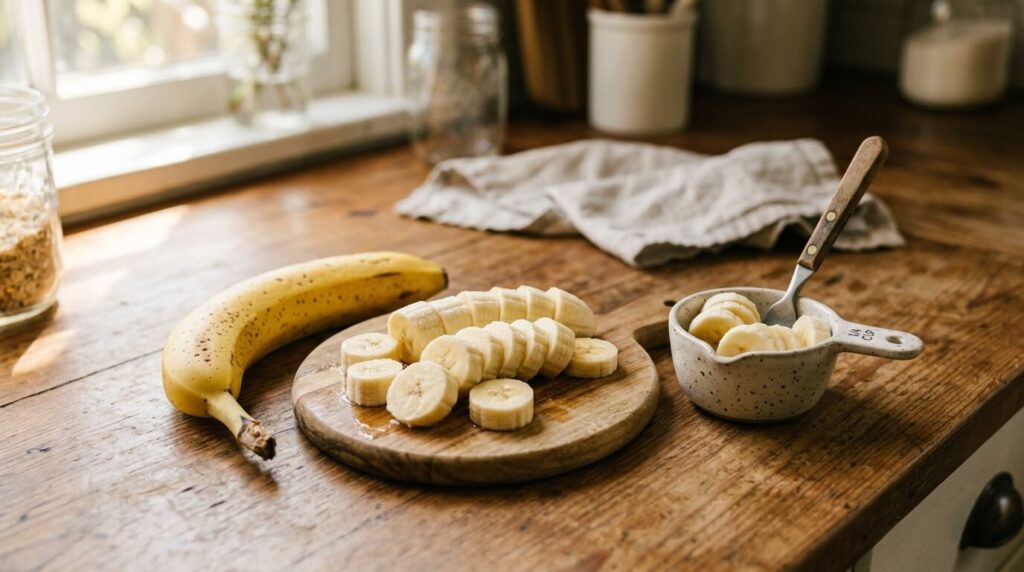
14. Banana — Your Dog’s Natural Recovery Snack
Think of banana as your dog’s natural recovery drink — in solid form.
Bananas are rich in potassium, magnesium, and vitamin B6. After hard play or intense exercise, your dog’s muscles deplete potassium rapidly — leading to soreness, cramping, and that heavy post-activity fatigue you can visibly see in them. A few small pieces immediately after activity replenishes those electrolytes and speeds recovery. The exact same reason human athletes reach for bananas after a workout.
The vitamin B6 also directly supports serotonin production in your dog’s brain — the chemical that governs mood stability, calmness, and anxiety response. Dogs receiving small, regular amounts of banana over time often show noticeably more settled emotional behavior and lower baseline anxiety.
Two to three small slices after exercise or as a daily treat. Never a whole banana — the sugar concentration is too high. Small pieces. Consistent use.

15. Coconut Oil — The One That Genuinely Surprises People
Most owners who have heard of giving coconut oil to dogs think of it as a coat trick. A bit of shine, a bit of softness. And yes — it does that. But that is barely the beginning.
The medium-chain triglycerides in coconut oil — MCTs — are a form of fat the body converts directly into usable energy without storing it as body fat first. For senior dogs with slowing metabolisms, or dogs recovering from illness who need an energy source that does not strain digestion, this is genuinely useful.
But here is what shocks most people: those same MCTs have been directly linked in research on aging dogs to measurably improved cognitive performance. Reduced confusion. Less disorientation. A demonstrable slowing of canine cognitive dysfunction syndrome — which is essentially the dog equivalent of dementia. The aging brain runs more efficiently on MCT-derived energy than on glucose. That is neuroscience, not opinion.
Topically, a small amount rubbed onto dry cracked paws or irritated skin provides both antimicrobial protection and deep moisture simultaneously.
Start with a quarter teaspoon for small dogs, half a teaspoon for larger breeds, added to food. Build up gradually — introducing too much too fast causes loose stools. Slow and consistent gets you all the benefits with none of the downsides.
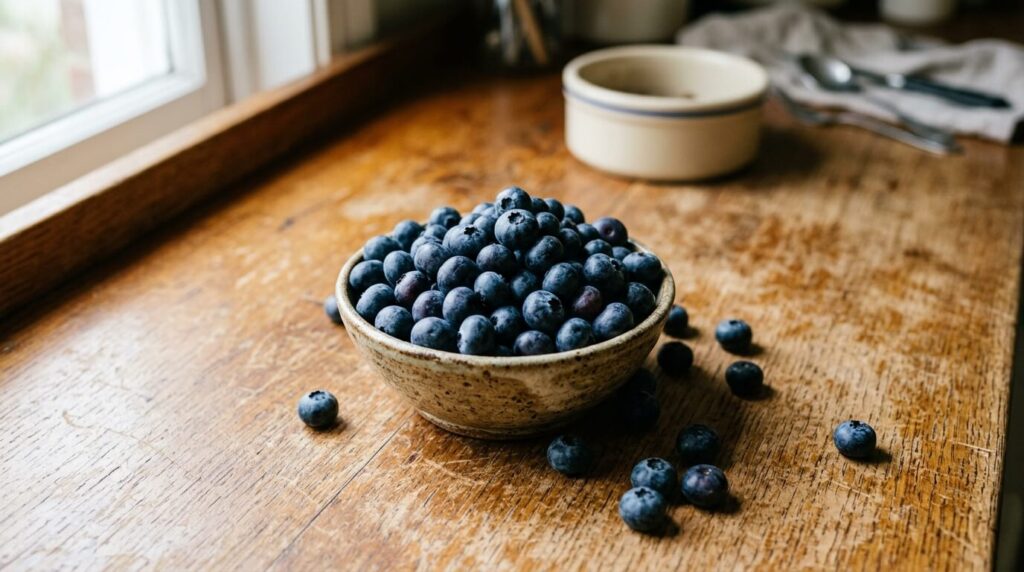
16. Blueberries — Brain Food in a Tiny Package
These tiny things look almost too small to matter. Don’t let the size fool you.
Do not let the size fool you. These are doing something significant.
A study from the University of Alaska found that dogs consuming blueberries regularly showed measurably better cognitive function — sharper memory, improved focus, and significantly slower mental decline with age. The reason is anthocyanins — a specific class of antioxidant that crosses the blood-brain barrier and directly combats the cellular damage driving brain aging.
If your older dog seems foggy lately — slower to respond, less aware of surroundings, or just not fully present in the way they used to be — four to five blueberries daily can produce a real difference within a few weeks. And those same anthocyanins simultaneously strengthen the immune system, so you are getting brain protection and immune support from one small fruit.
Fresh or frozen both work. No preparation needed. Just add them to the bowl.
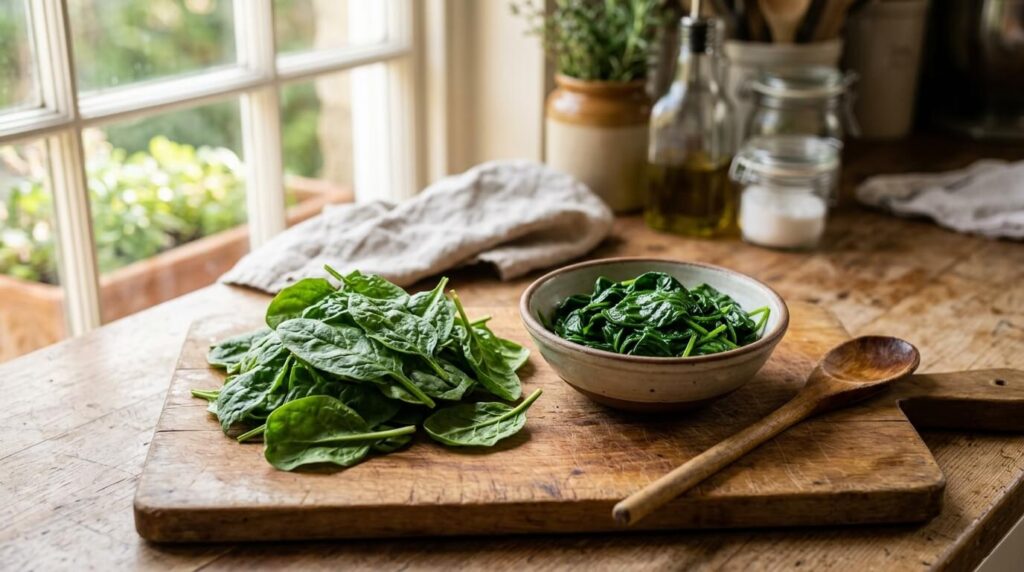
17. Spinach — The One You Were Told to Avoid (But Shouldn’t)
Most owners will not go near spinach because of something they heard once and never questioned. The warning spread fast, it stuck, and almost nobody looked at the actual science behind it.
Here is what the research actually says. Spinach contains iron, folate, vitamin K, and vitamin C — nutrients that directly support blood health, bone density, and immune function. For dogs dealing with anemia, chronic low energy, or a weakened immune system, it is genuinely valuable.
Yes, spinach contains oxalic acid. And yes, in genuinely massive quantities, that can affect kidney function. But research from AKC — Can Dogs Eat Spinach? confirms the amount required to cause harm is so far beyond any normal feeding portion that it poses zero practical risk at sensible serving sizes.
One to two teaspoons of steamed spinach mixed into food, three times a week. Steaming reduces oxalic acid content by around 30% and improves nutrient absorption at the same time. Small amount. Real benefit. No meaningful risk.
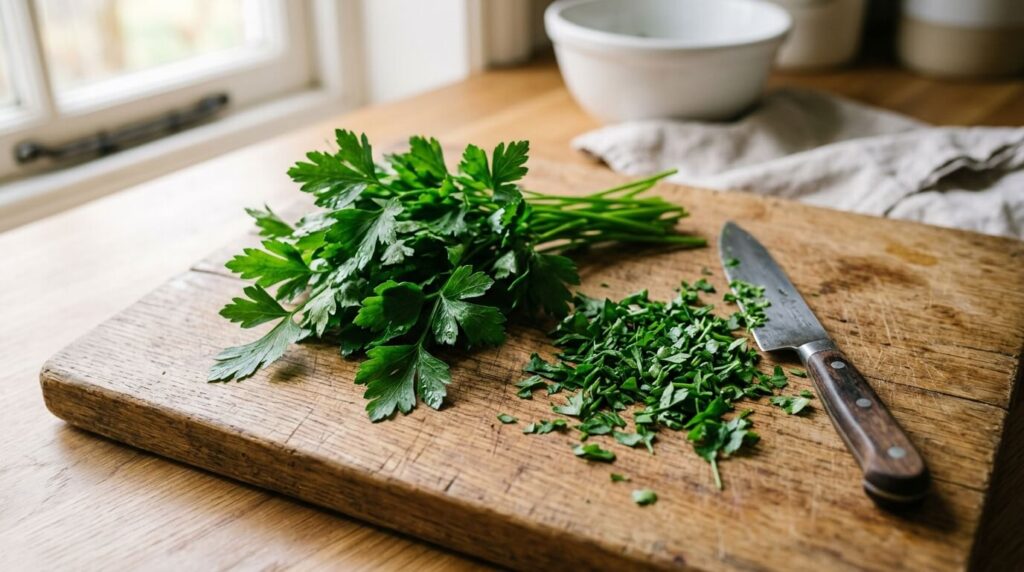
18. Parsley — The Two-in-One Win Nobody Talks About
This one is so practical and so overlooked that it might be the easiest quick win on this entire list.
Fresh parsley — flat-leaf or curly specifically (not spring parsley, which is a different plant and should be avoided entirely) — delivers two completely distinct benefits from one cheap herb most people already have growing in their garden or sitting in their fridge.
First, breath. Parsley contains chlorophyll and natural antimicrobial compounds that neutralize the bacteria responsible for bad breath in your dog’s mouth — not masking the odor, eliminating it at the source. A teaspoon chopped into their food daily produces a noticeable difference within a week.
Second, kidney support. Parsley acts as a gentle natural diuretic, stimulating urine flow and helping the body flush toxins more efficiently — particularly valuable for dogs prone to urinary issues or with early kidney concerns flagged by their vet.
A teaspoon for small dogs, a tablespoon for larger breeds, chopped fresh into food. Two problems solved. One ingredient. Costs almost nothing.
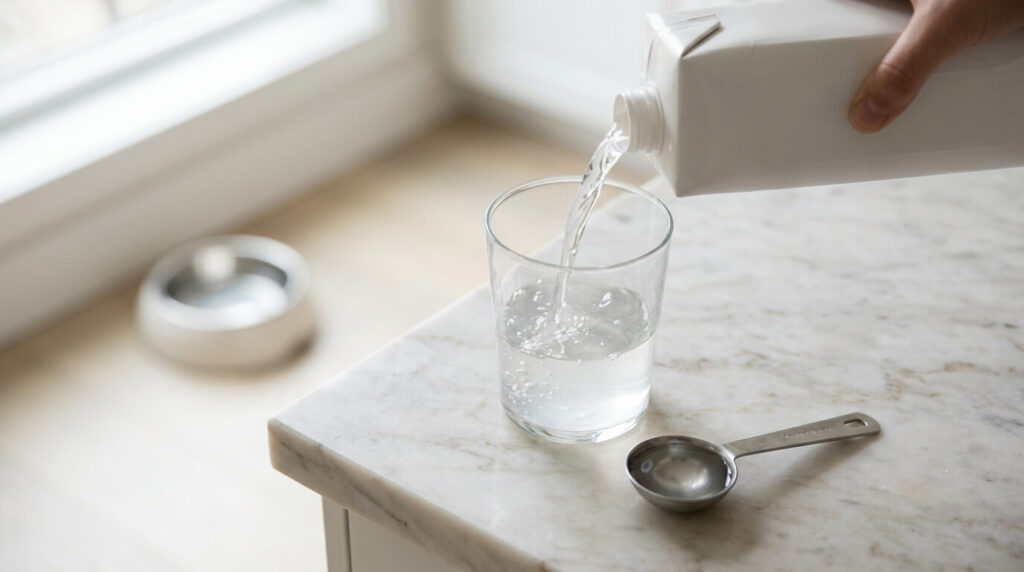
19. Coconut Water — The Emergency Hydration Tool
Plain coconut water — no added sugar, no flavoring, no sweetened versions — is one of the most complete natural hydration solutions available for dogs. And almost no one thinks to use it.
It contains all five core electrolytes the body needs for fluid balance, muscle function, and organ performance: potassium, magnesium, calcium, sodium, and phosphorus. Plain coconut water contains all five core electrolytes the body needs — potassium, magnesium, calcium, sodium, and phosphorus — making it one of the most complete natural hydration options available.
Reach for it when your dog is sick and refusing to drink. When they are recovering from vomiting or diarrhea and sitting right on the edge of dehydration. When an elderly dog’s kidneys are struggling with fluid regulation and plain water is not enough.
Two to four tablespoons mixed into water or poured over food. Serve at room temperature for sick dogs — it absorbs faster than cold liquid. Keep a can in your pantry right now, before you ever need it. You will not want to be making a grocery run in the middle of a crisis.
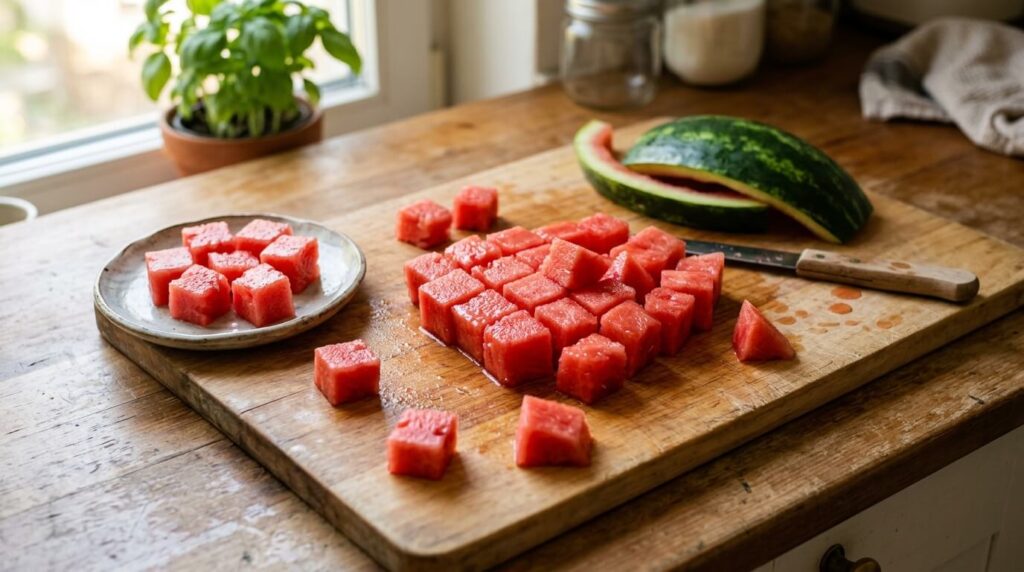
20. Watermelon — Far More Than a Summer Treat
Most owners think of watermelon as a warm-weather snack and nothing more. Understandable. But it is quietly doing something far more significant every single time you give it.
Watermelon is 92% water — one of the most hydrating foods that physically exists. And the natural sugars and electrolytes in the flesh help the body absorb and retain that hydration more effectively than plain water alone. On hot days or after intense physical activity, that difference matters more than people realize.
It also contains lycopene — a powerful antioxidant that actively supports cardiovascular health and has been studied specifically for its ability to reduce oxidative cellular damage over time. Plus vitamins A, B6, and C, working consistently in the background every time your dog takes a bite.
Two things to always do before serving: remove the rind completely — it causes digestive upset — and remove all seeds. Seedless watermelon makes this simple. Cut the flesh into small cubes.
On a hot day, freeze those cubes first. Your dog will act like it is the greatest thing that has ever happened to them. And while they are absolutely convinced they are just getting a treat — they are getting hydrated, protected by antioxidants, and cooled down all at the same time.
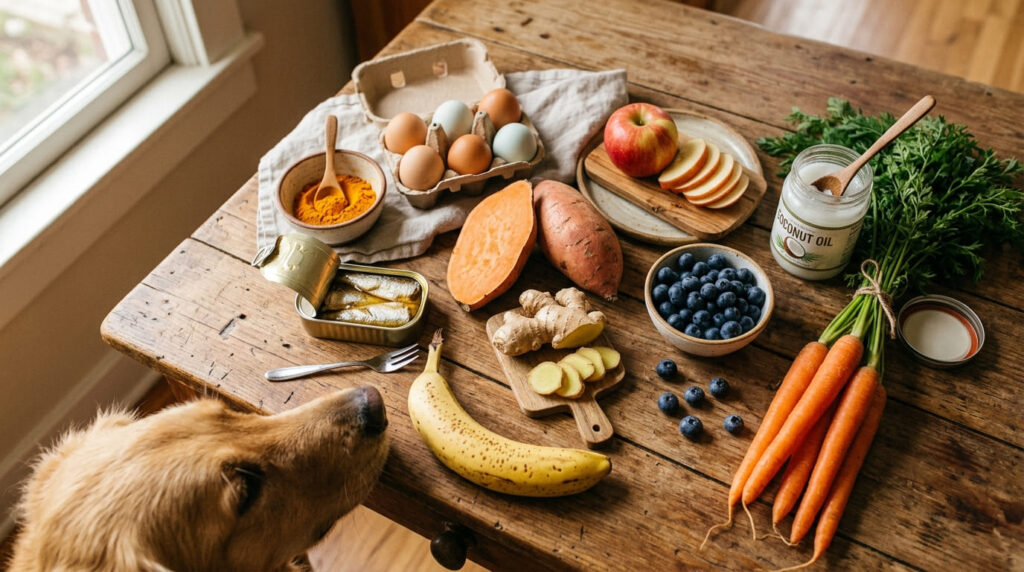
Where to Start: Match the Food to What Your Dog Needs Right Now
You do not need all twenty at once. Start with two or three that match what your dog is actually dealing with today.
| What your dog is struggling with | Start here |
|---|---|
| Joint pain or stiffness | Turmeric + sardines |
| Digestive issues or loose stools | Greek yogurt + pumpkin |
| Skin problems or constant itching | Oatmeal + eggs |
| Aging dog slowing down mentally | Blueberries + coconut oil |
| Bad breath | Parsley |
| Car sickness or nausea | Ginger |
| Low energy or post-exercise recovery | Banana + bone broth |
| Seasonal allergies | Apple + carrots |
Pick your two. Be consistent. Give it three to four weeks. Then come back and tell us what changed — we read every comment posted here, and the most honest ones tend to become the next article.
A Few Important Reminders Before You Go
Introduce new foods one at a time and in small amounts — your dog’s gut needs time to adjust. Every dog is different, and what works beautifully for one may not suit another. These foods support health — they do not replace veterinary care. If your dog is seriously unwell, your vet comes first, always. And when in doubt about any specific food for your dog’s individual situation, ask your vet before adding it.
What goes into your dog’s bowl every single day is medicine. It just does not come with a prescription label.
Did this help? Share it with one dog owner in your life. You might actually change that dog’s life. And if you want more honest, research-backed dog health content — browse the rest of the For Better For Dogs blog. We’re here every week with the stuff most people aren’t talking about.
For Better For Dogs — because understanding your dog is the most powerful thing you can do for them.